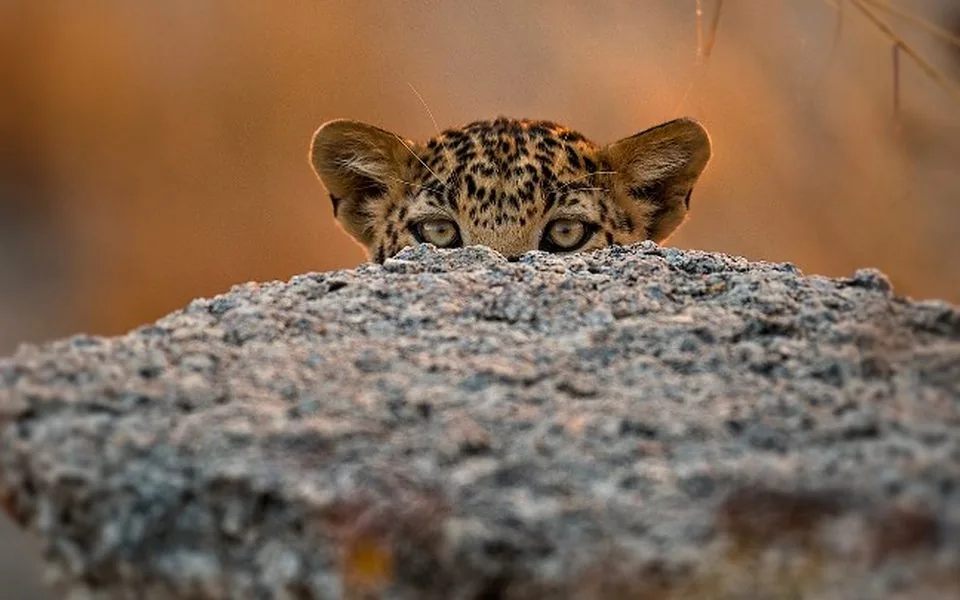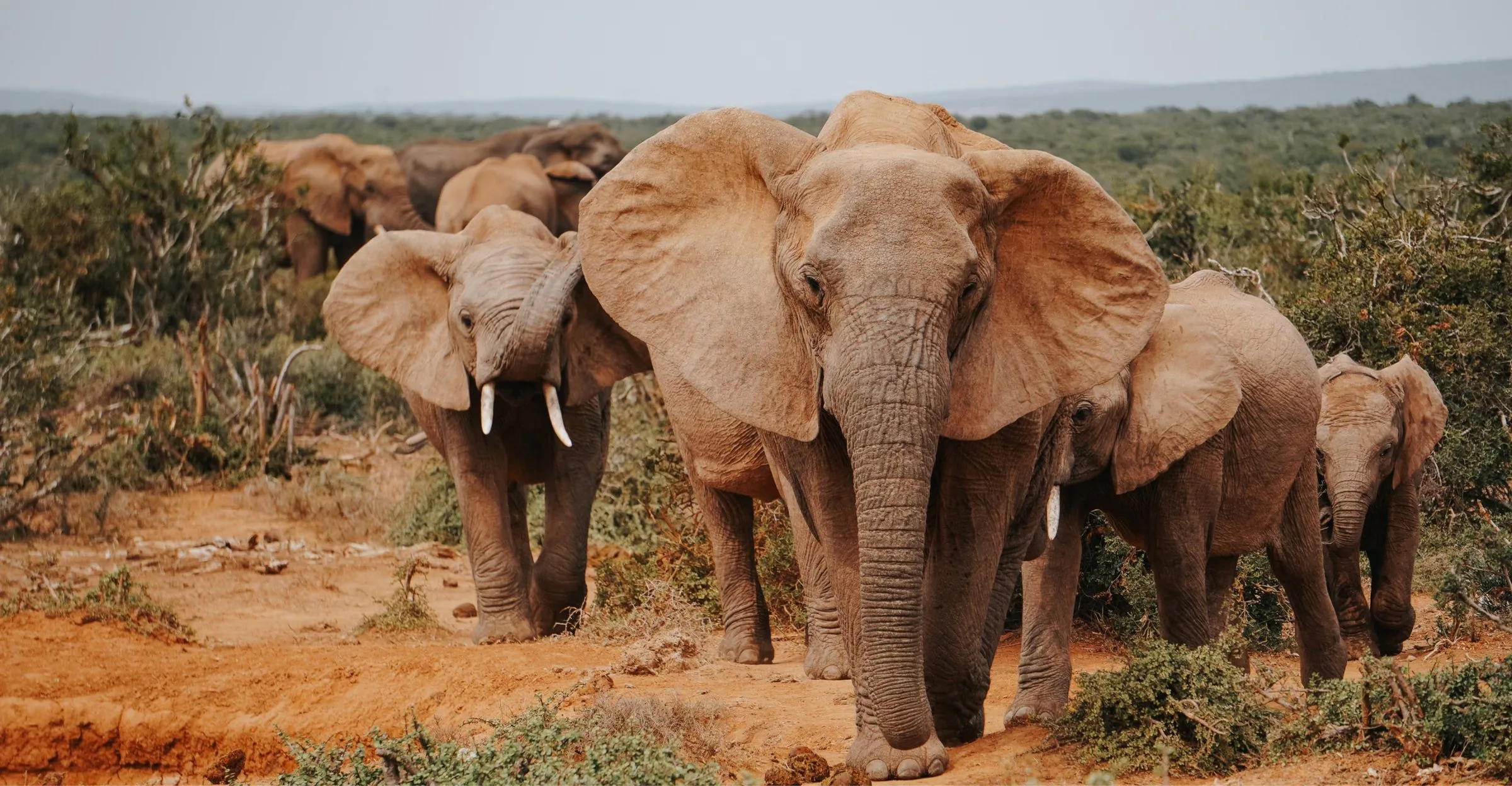
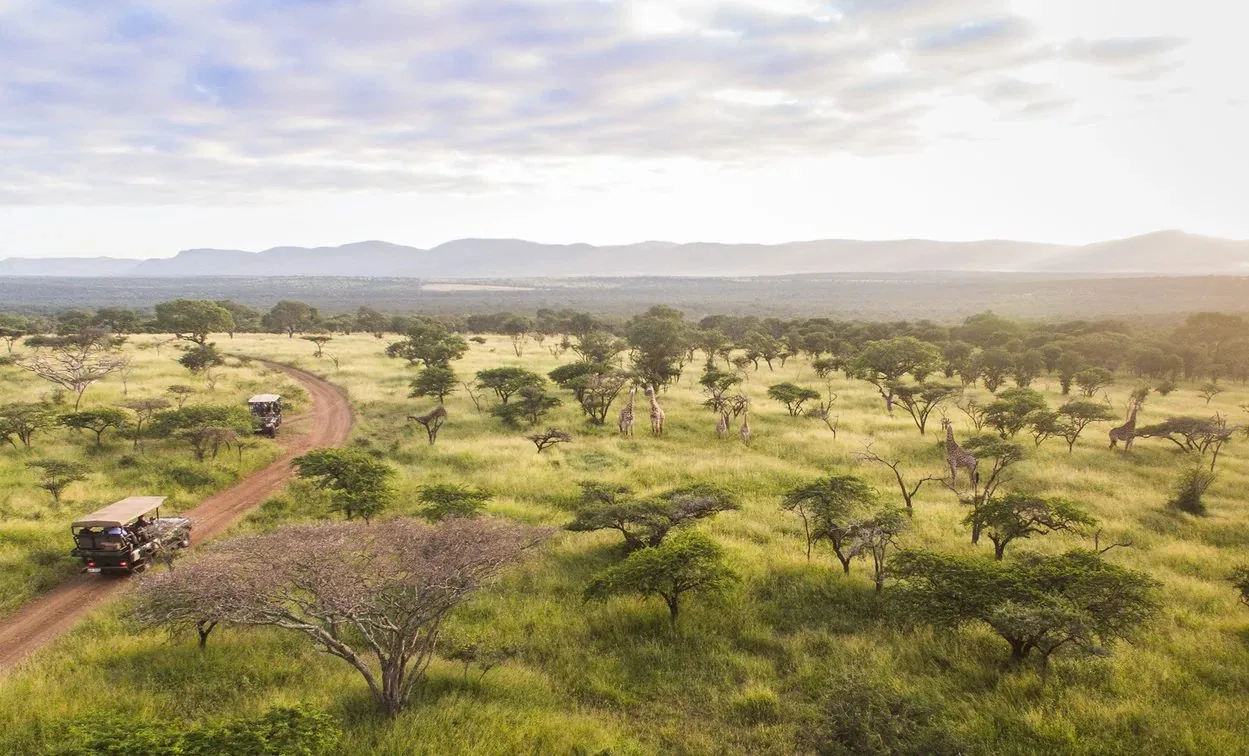
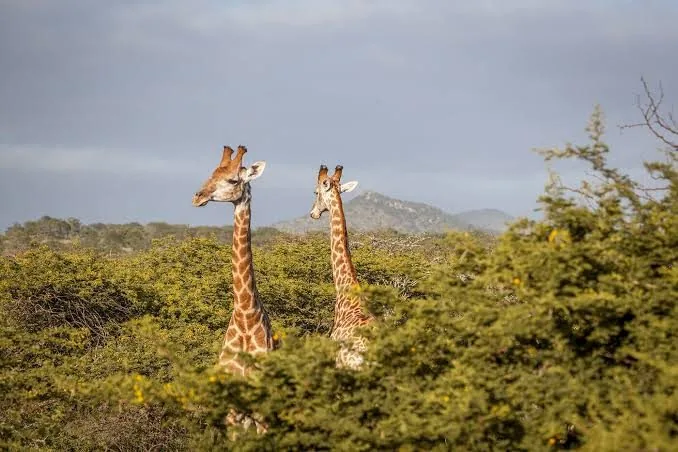
Manyoni covers around 57,000 acres and is home to the Big Five, along with cheetah, wild dog, pangolin and more than 400 species of bird. Rhino Sands itself is tiny, with just five tented suites and a maximum of ten guests, so the whole experience feels immediately more personal. Game drives are limited to six guests per vehicle, which matters more than it might sound. A safari changes completely when you can spend time at a sighting without a queue of vehicles behind you, and when your guide has the freedom to follow tracks, head off-road where permitted and wait to see what unfolds rather than rushing on to the next stop.
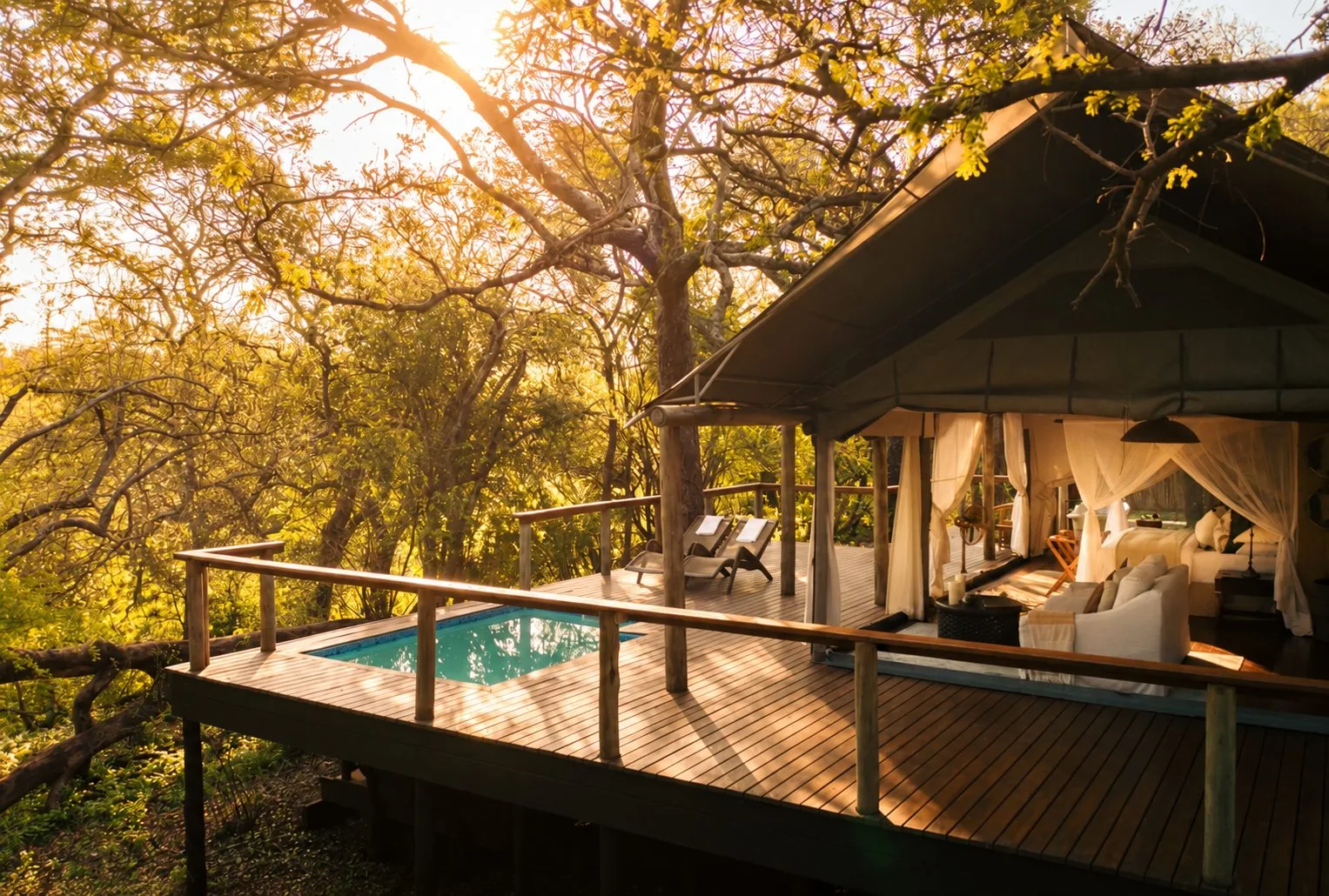
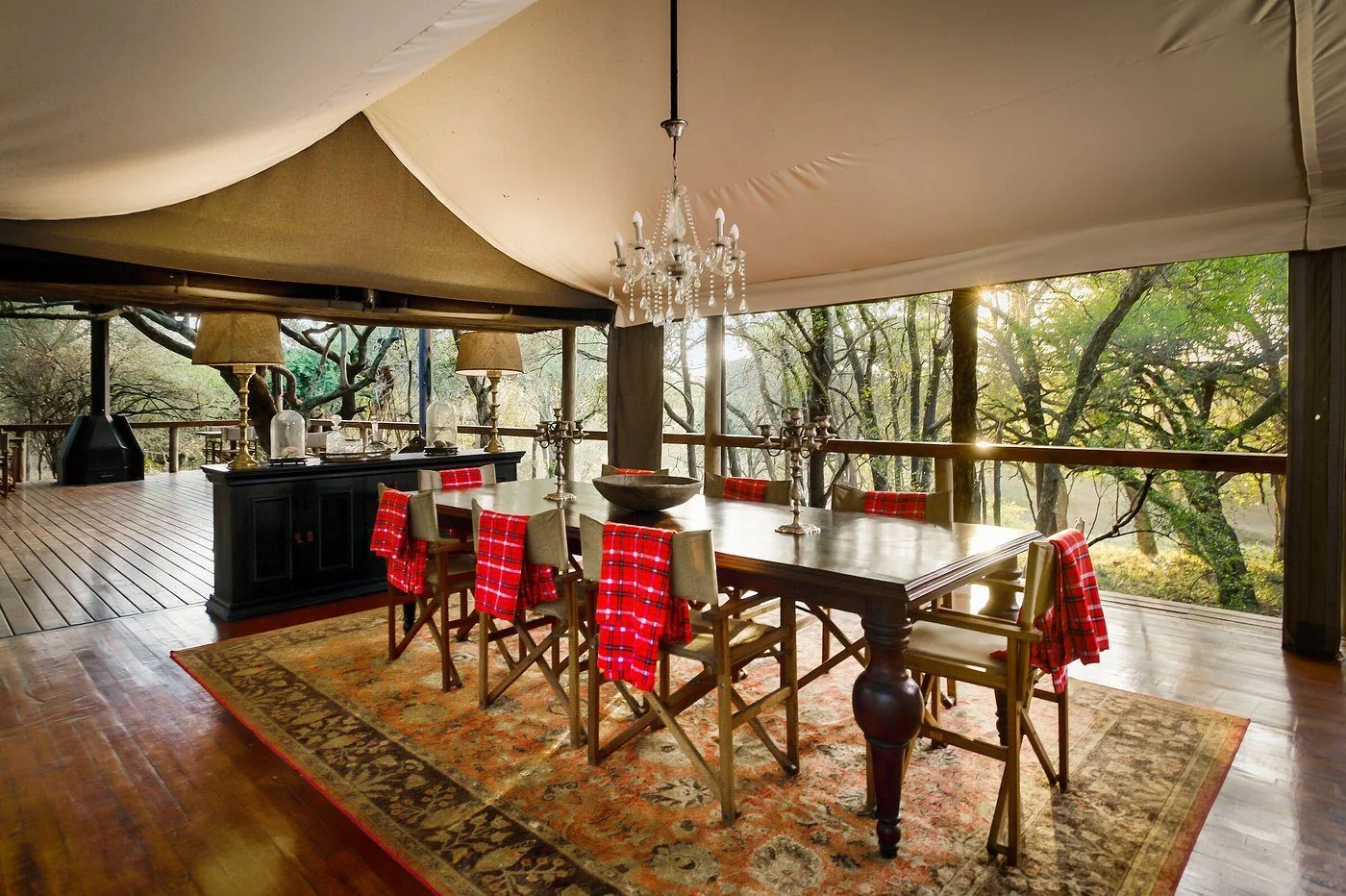
The camp sits within riverine forest beside the Msunduze River, with the suites raised on timber platforms among the trees. They are proper canvas safari tents rather than conventional hotel rooms made to look vaguely “safari”, and that makes a difference. You can hear the bush around you, feel the temperature change as evening comes in and wake to birds moving through the canopy outside. Each suite still has plenty of comfort, including a private deck, plunge pool, outdoor shower and a bath looking towards the forest, but the design keeps you connected to where you are rather than stealing you away from it.
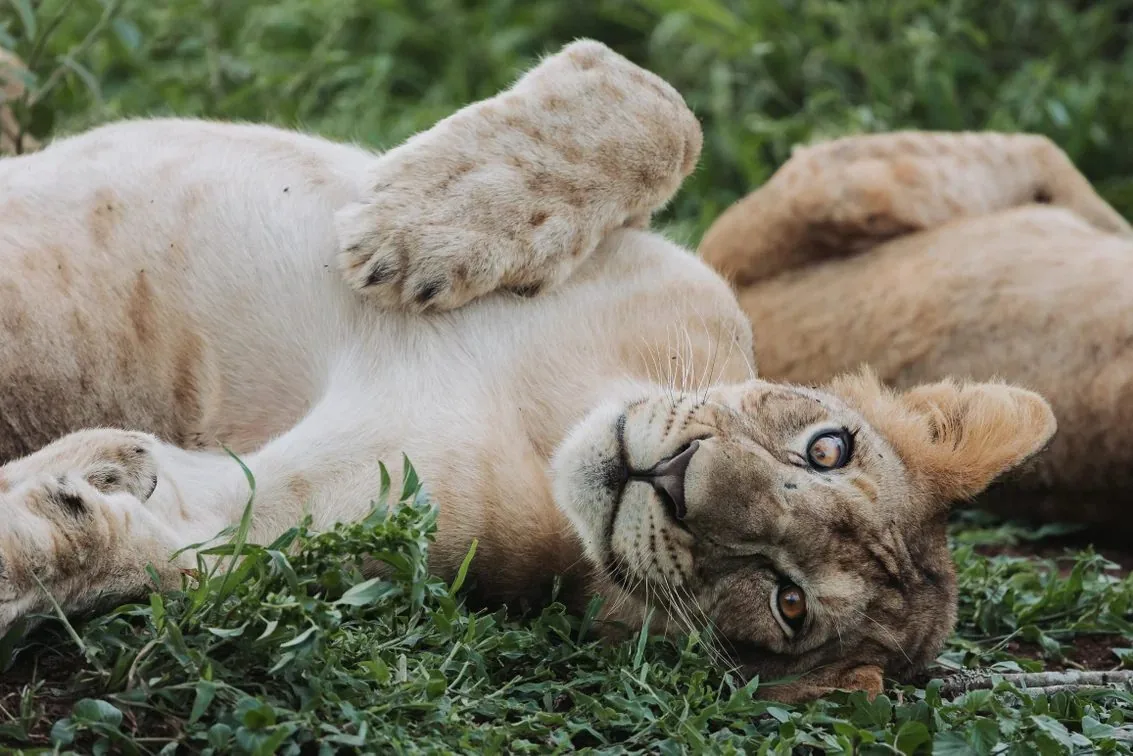
Days here settle into a rhythm very quickly. Mornings start early, usually with coffee before heading out as the reserve begins to wake up. Those first few hours can be some of the best of the day, particularly when tracks from the night before lead you towards lion, leopard or wild dog. The small vehicles and private-reserve setting mean sightings tend to feel far more relaxed, and there is time to sit and watch rather than treating wildlife as a checklist. Some mornings are full of action. Others involve an awful lot of staring at tracks in the sand while your guide looks increasingly confident that something interesting is just around the corner.
Back at camp, breakfast is properly earned, followed by the slower part of the day. There is lunch later on, but otherwise the hours between game drives are yours. Read beside the plunge pool, have a sleep, sit on the deck with a drink or simply watch the riverbed below. It is usually at this point that any plans you had to be productive disappear completely, which is probably how it should be.
By late afternoon, everyone gathers again for the second game drive. The light softens, the temperature drops and the reserve changes mood completely. There is usually a stop somewhere along the way for a sundowner before continuing into dusk, when nocturnal animals begin to move and the spotlight comes out. By the time you return to camp, the fire is going and dinner is waiting, often served around the boma or beneath the stars. It is relaxed, generous and very much part of the experience rather than simply somewhere to sleep between drives.
What makes Rhino Sands particularly interesting, though, is that the story behind it did not begin in hospitality at all. Owners Dale and Shannon Airton both came to the lodge through conservation. Dale grew up with a fascination for wildlife and Zululand’s game reserves, studied conservation and began working in Hluhluwe-Imfolozi Park in 1999. Shannon moved to South Africa from the United States in 2002 with a degree in Conservation and Animal Behaviour, and the two met while working on conservation projects in Hluhluwe-Imfolozi.
Dale later joined WWF’s Black Rhino Range Expansion Project, which became particularly significant when Manyoni was established in 2004. The reserve itself was created when 17 privately owned properties dropped their internal fences, largely so the newly connected landscape could become a black rhino reintroduction site. Dale and Shannon became involved with Manyoni through that work, years before Rhino Sands existed. Conservation here is not something that was added later as part of the guest experience; it is the reason the family was connected to this land in the first place.
The Airtons later invested in land within Manyoni, including the property that would eventually become Rhino Sands. Long before there was a lodge, though, it was simply somewhere the family liked to camp. On one birthday weekend, someone decided that digging a hole every time nature called had lost its charm, so Dale installed an old ceramic toilet in the middle of the bush, complete with some fairly creative plumbing. It stayed there for years, which is not the usual opening chapter in a luxury lodge story, but perhaps it should be.
Three years later, that family campsite evolved into Rhino Sands, opening in October 2017. The tree they camped beneath still sits at the centre of the boma today, where guests gather around the fire in the evenings. It is an unpolished origin story, and it explains a lot about why the camp feels the way it does. Rhino Sands was not designed by people approaching the bush as a blank site for a luxury development. It came from people who already knew the reserve, understood its conservation challenges and had spent years working in the landscapes surrounding it.
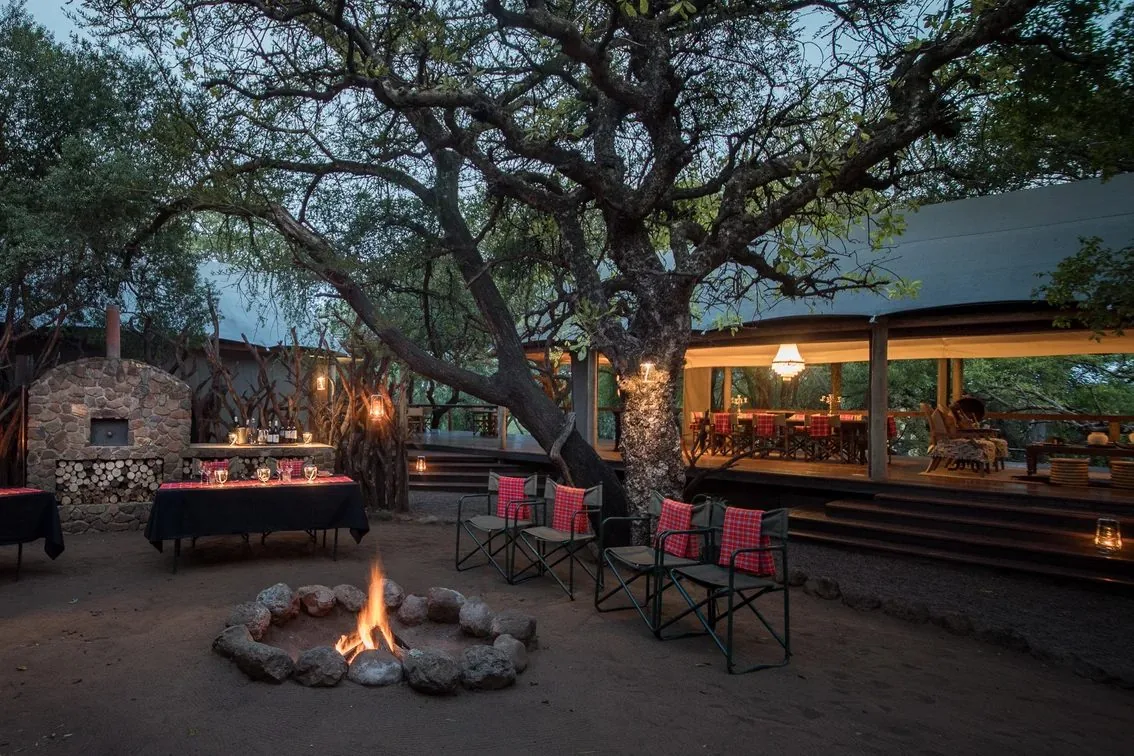
That background is reflected in the way the camp has been built. Canvas and timber structures sit lightly on raised platforms, with walkways working around established trees rather than clearing the landscape to make everything neat and symmetrical. Much of the camp runs on solar power, and the philosophy from the beginning was that if Rhino Sands were ever removed, the forest should eventually be able to reclaim the site. There is luxury here, certainly, but it is restrained and appropriate to the setting rather than trying to compete with it.
The conservation story becomes even more tangible through some of the optional experiences available to guests. Depending on what is happening on the reserve at the time, it may be possible to observe a rhino dehorning or horn-trimming procedure. These are genuine working conservation interventions rather than activities staged for visitors, and they give a very direct insight into the reality of protecting rhino in South Africa today.
Other optional conservation experiences can include pangolin-focused activities, endangered-species monitoring and time with Manyoni’s anti-poaching teams. Manyoni has been particularly successful with pangolin conservation, reintroducing Temminck’s ground pangolins to an area where they had been locally extinct for almost 70 years. The reserve has also worked extensively on cheetah reintroduction and broader endangered-species management. These activities vary according to what is happening on the reserve at the time, which is exactly as it should be. Wildlife is not especially interested in keeping to anyone’s itinerary.
That is what makes Rhino Sands so interesting to us. On one level, it is simply a very good safari camp: small, beautifully positioned, with excellent guiding, intimate game drives and enough comfort to make the downtime between them genuinely enjoyable. But there is another layer sitting quietly underneath it all. The founders came to this place through conservation, the reserve itself was shaped around protecting endangered wildlife, and the optional experiences allow guests to see some of that work first-hand.
You can come here for the lions, the leopard and the sundowners, and you absolutely should. But you leave with a much better understanding of what has to happen behind the scenes to make those moments possible in the first place.
We’ll time it with the reserve
Which conservation experiences may be running when you travel, how to pair Rhino Sands with Cape Town or the Kruger, and how many nights to give it.
Questions we’re often asked
Where is Rhino Sands?
Inside Manyoni Private Game Reserve in northern KwaZulu-Natal, South Africa, a 57,000-acre Big Five reserve.
How many guests does Rhino Sands take?
Just five tented suites and a maximum of ten guests, with game drives limited to six guests per vehicle.
Can guests join conservation work at Rhino Sands?
Depending on what is happening on the reserve, optional experiences can include rhino dehorning procedures, pangolin activities, endangered-species monitoring and time with anti-poaching teams.