That isolation created the extraordinary wildlife the islands are known for today, but it also made those species incredibly vulnerable once people arrived.
The human history is rather less graceful. Europeans recorded the islands in the 16th century, followed later by pirates, sealers and whalers. Giant tortoises were taken in huge numbers, while introduced goats, pigs, rats, cats and other species damaged habitats and preyed on native wildlife. By the middle of the 20th century, scientists were warning that some Galápagos species could disappear altogether. Ecuador created the Galápagos National Park in 1959, the Charles Darwin Foundation was founded that same year, and the Charles Darwin Research Station followed in 1964.
Charles Darwin had arrived much earlier, in 1835, aboard HMS Beagle. He spent only around five weeks here, collecting specimens and making observations that would later contribute to his thinking around evolution by natural selection. The story is usually reduced to finches and beaks, but Darwin was just as interested in differences between mockingbirds, tortoises and the geology of the individual islands. What made the Galápagos so important was not simply that the wildlife was unusual, but that closely related species had adapted differently from island to island.
That is the landscape Aqua Mare moves through today.
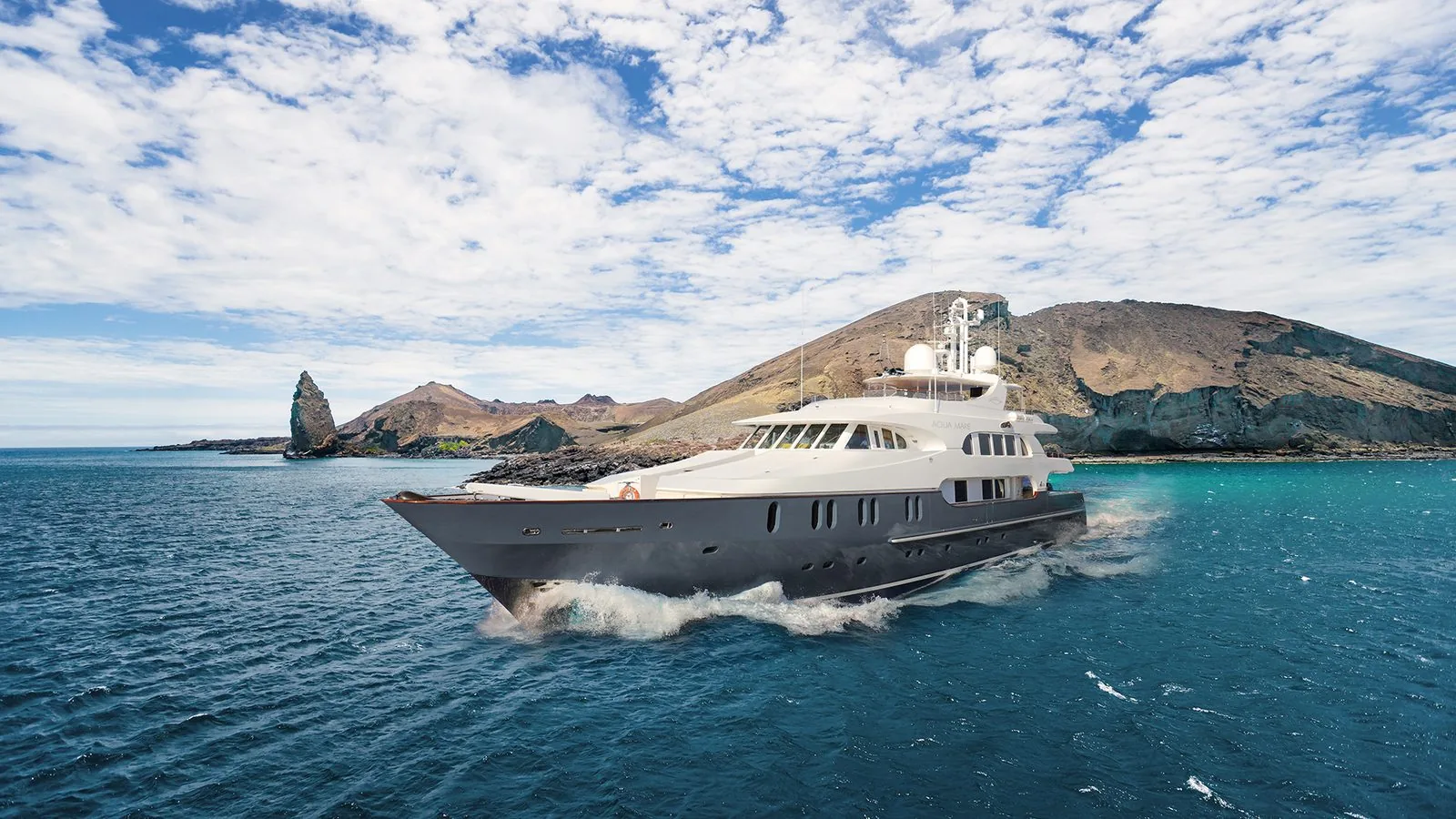
The yacht carries just 16 guests, with two naturalist guides on board, which means the wildlife is not simply pointed out and ticked off as you go. The guides explain how one island can differ completely from another, how ocean currents affect breeding and feeding patterns, and why an animal that appears perfectly healthy can still be part of a population under pressure.
That context changes the experience completely.
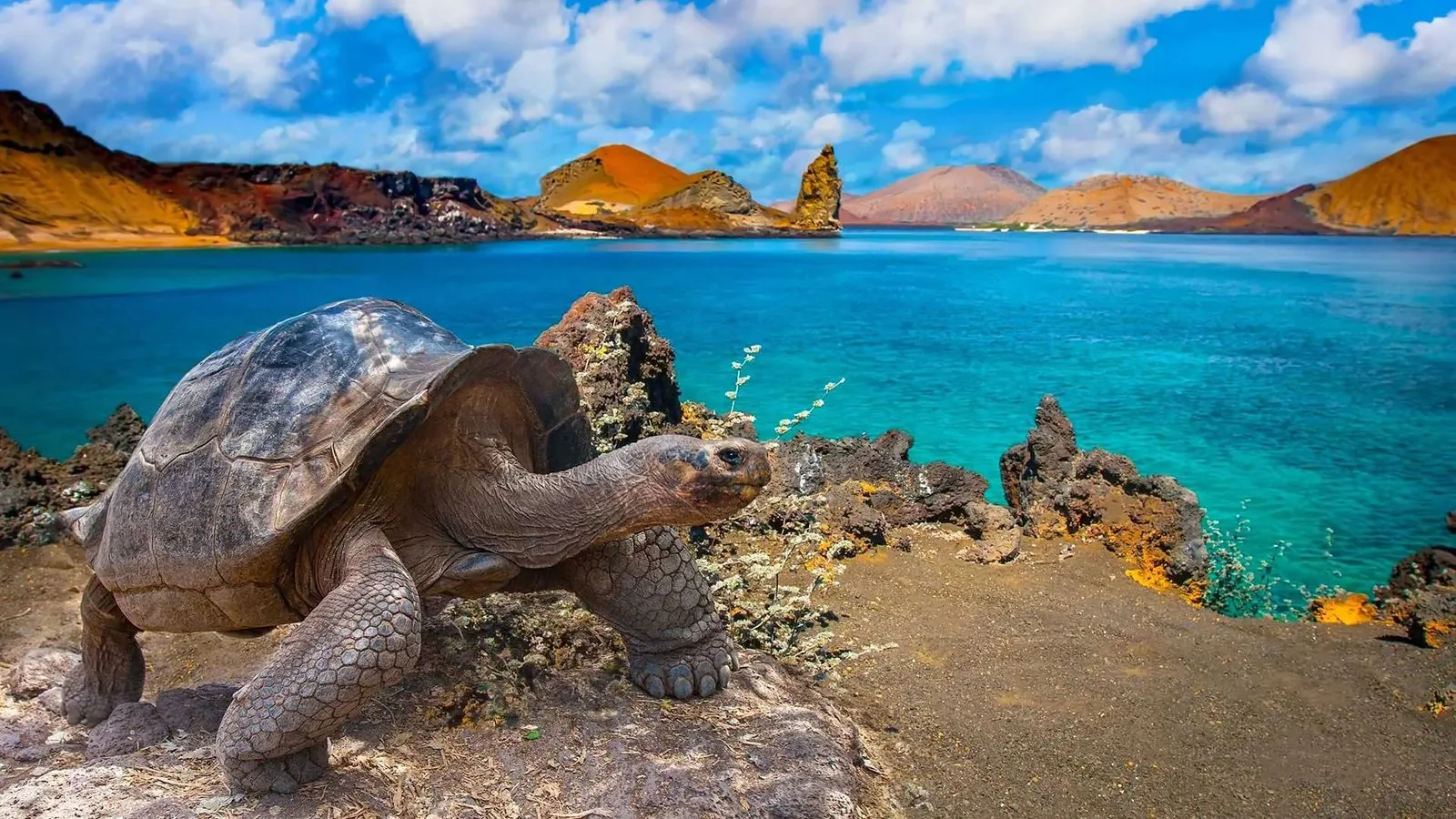
A giant tortoise wandering through the highlands is not simply an impressive animal to photograph. It is part of one of the longest-running conservation stories in the archipelago. Two centuries of hunting pushed several tortoise species to extinction and reduced others to tiny populations, while invasive species destroyed nests and competed for food. Breeding programmes established in the 1960s have since returned more than 8,000 tortoises to the wild, and scientists continue to study their migration, breeding, health and role in the wider ecosystem. And they do far more than slowly wander around looking wise.
Giant tortoises are ecosystem engineers. As they move through the landscape they create pathways, disperse seeds and influence vegetation, so restoring a tortoise population helps restore far more than the tortoises themselves.
Marine iguanas tell a completely different story.
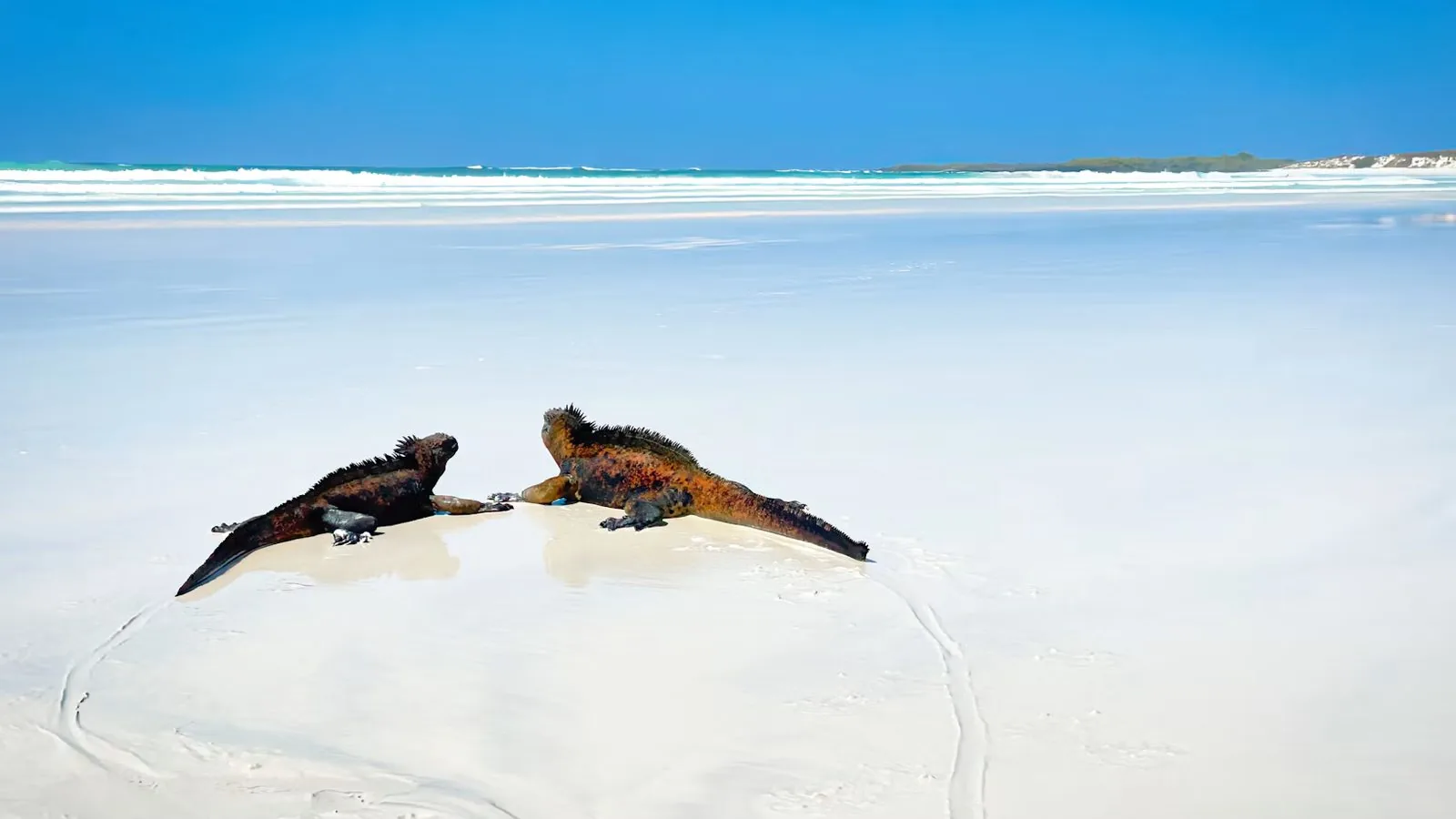
They are the world’s only marine lizards and look almost prehistoric when you first see them piled together on black lava. They dive beneath the surface to graze on algae, use flattened tails to move through the water and strong claws to hold onto rocks in the surge. Their dark skin helps them absorb heat quickly once they return to land, while specialised salt glands allow them to expel excess salt through their nostrils.
Hence the rather dramatic sneezing. It is not elegant, but it works.
What makes them particularly interesting from a conservation point of view is how closely their survival is tied to ocean temperature. Marine iguanas depend on cold, nutrient-rich water to support the algae they eat. During strong El Niño events, warmer water can reduce that food supply dramatically and populations can fall sharply. Some individuals have even been recorded shrinking in body size during severe food shortages and growing again when conditions improve.
Galápagos penguins are another reminder of just how unusual these islands are. They are the only penguin species found naturally this far north, surviving because cold, nutrient-rich currents reach the western islands. That reliance on cold water also makes them vulnerable when ocean temperatures rise, particularly during El Niño events, when food becomes harder to find and breeding success can drop.
Below the surface, the conservation story becomes even bigger.
The Galápagos Marine Reserve was established in 1998 and protects a vast marine ecosystem surrounding the islands. Hammerheads, Galápagos sharks, tiger sharks, silky sharks and rays all move through these waters, with Darwin and Wolf islands supporting one of the greatest concentrations of sharks on Earth. The difficulty, of course, is that sharks are not especially interested in where humans have drawn the reserve boundary. Many migrate thousands of kilometres through the Eastern Tropical Pacific, moving between protected waters and areas where fishing pressure is considerably higher.
This is where Aqua Expeditions has taken its role in the Galápagos beyond simply operating a yacht.
Since 2024, Aqua has partnered with the Charles Darwin Foundation, supporting research into shark ecology, mangrove ecology and climate change, as well as education and outreach. The partnership includes annual funding, additional fundraising and opportunities for guests to understand some of the science taking place behind the scenes.
The shark work goes far beyond counting animals. Researchers study where different species move, how populations are connected, their health and how often they travel in and out of protected areas. That information helps scientists understand whether current conservation measures are actually working and where further protection may be needed.
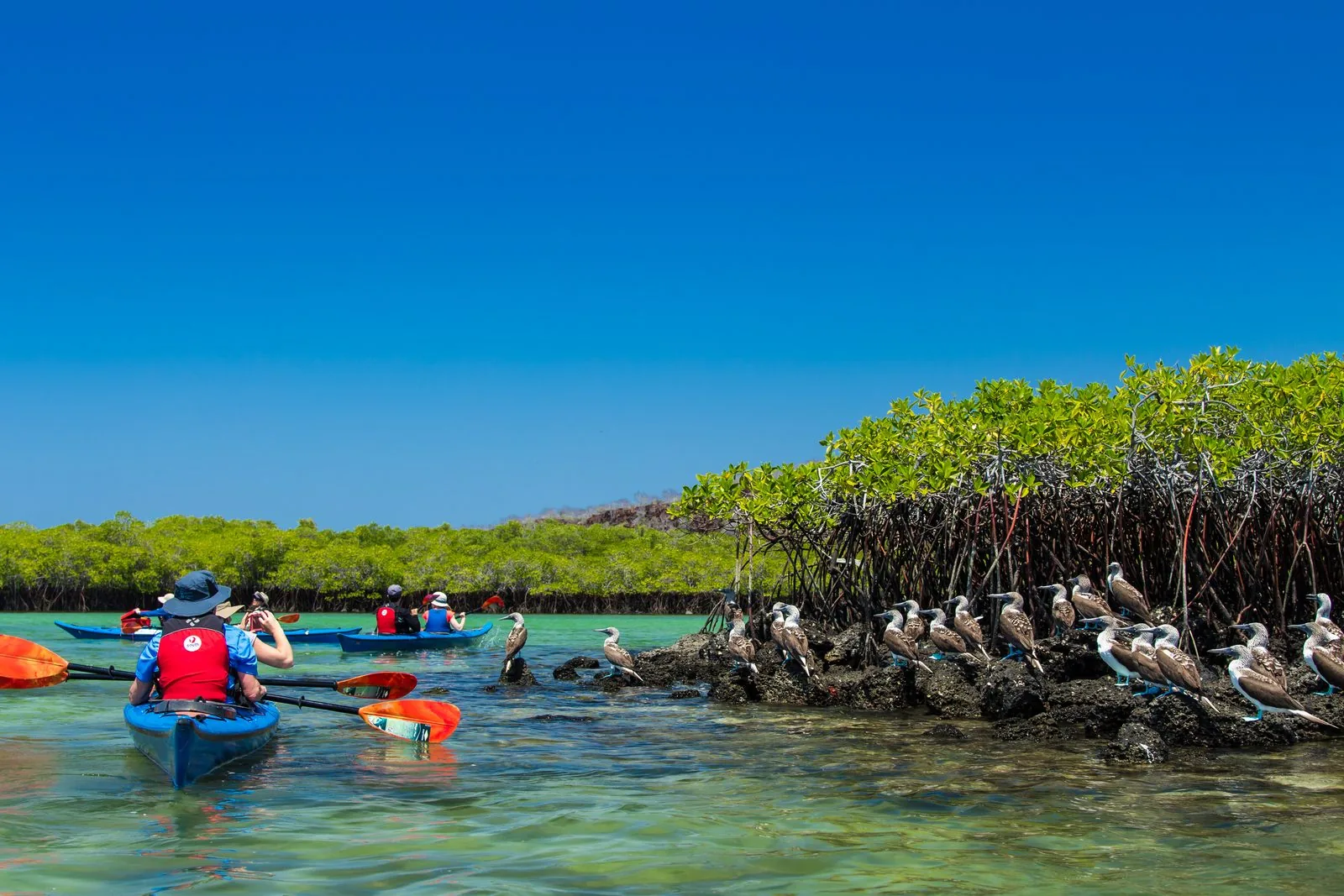
Mangroves are perhaps the less glamorous part of the story, but they are just as important. In the Galápagos they can grow directly on young lava rock, rather than in the muddy estuaries we usually associate with mangrove forests. They provide nursery grounds and shelter for sharks, rays, turtles, fish, sea lions, marine iguanas and threatened birds, while also storing significant amounts of carbon. Researchers are mapping these habitats, measuring how much carbon they hold and identifying which areas are most important for the long-term health of the ecosystem.
Aqua’s support helps fund that work, and there is a direct connection for guests too. On certain itineraries, there is the opportunity to visit the Charles Darwin Foundation’s Marine Research Center and see more of the science happening behind the conservation. Aqua also supports fundraising for specific projects, including shark health checks and mangrove restoration.
It is a useful reminder that much of what protects the Galápagos does not happen anywhere near a wildlife sighting. It happens in laboratories, tracking programmes, nurseries, data sets and years of patient fieldwork.
Then you come back to Aqua Mare, which is quite a contrast.
She is a 50-metre superyacht carrying just 16 guests across seven suites, with 16 crew and two naturalist guides. The scale matters. Excursions stay small, there is space to ask questions, and you never feel as though you are moving around the islands as part of a large group. The yacht has a sun deck, jacuzzi, outdoor dining areas, a Beach Club and generous suites, including an Owner’s Suite of around 80 square metres.
That comfort becomes very welcome because Galápagos days are busy.
A morning might start with a walk across a lava field, followed by snorkelling with sea lions or marine iguanas. The afternoon could mean kayaking, paddleboarding, birding or heading out by skiff along a cliff line. Some islands feel stark and almost lunar; others are green, wet and full of tortoises. The landscape changes constantly, so even after several days the experience never feels repetitive.
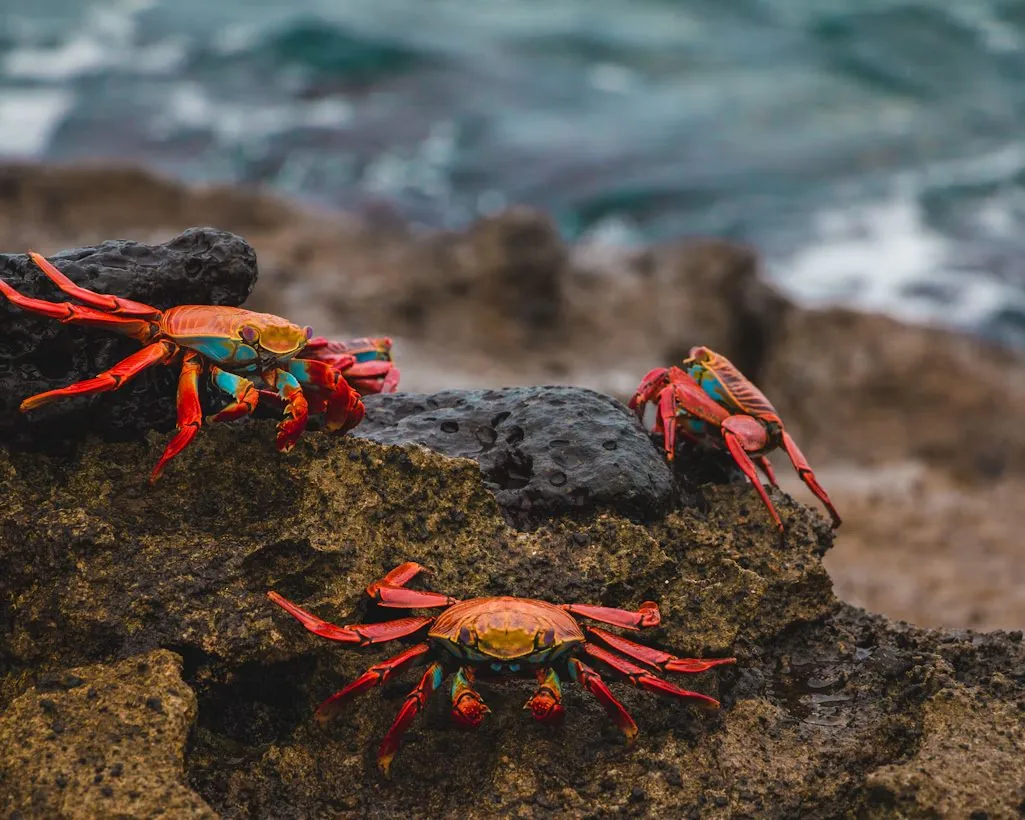
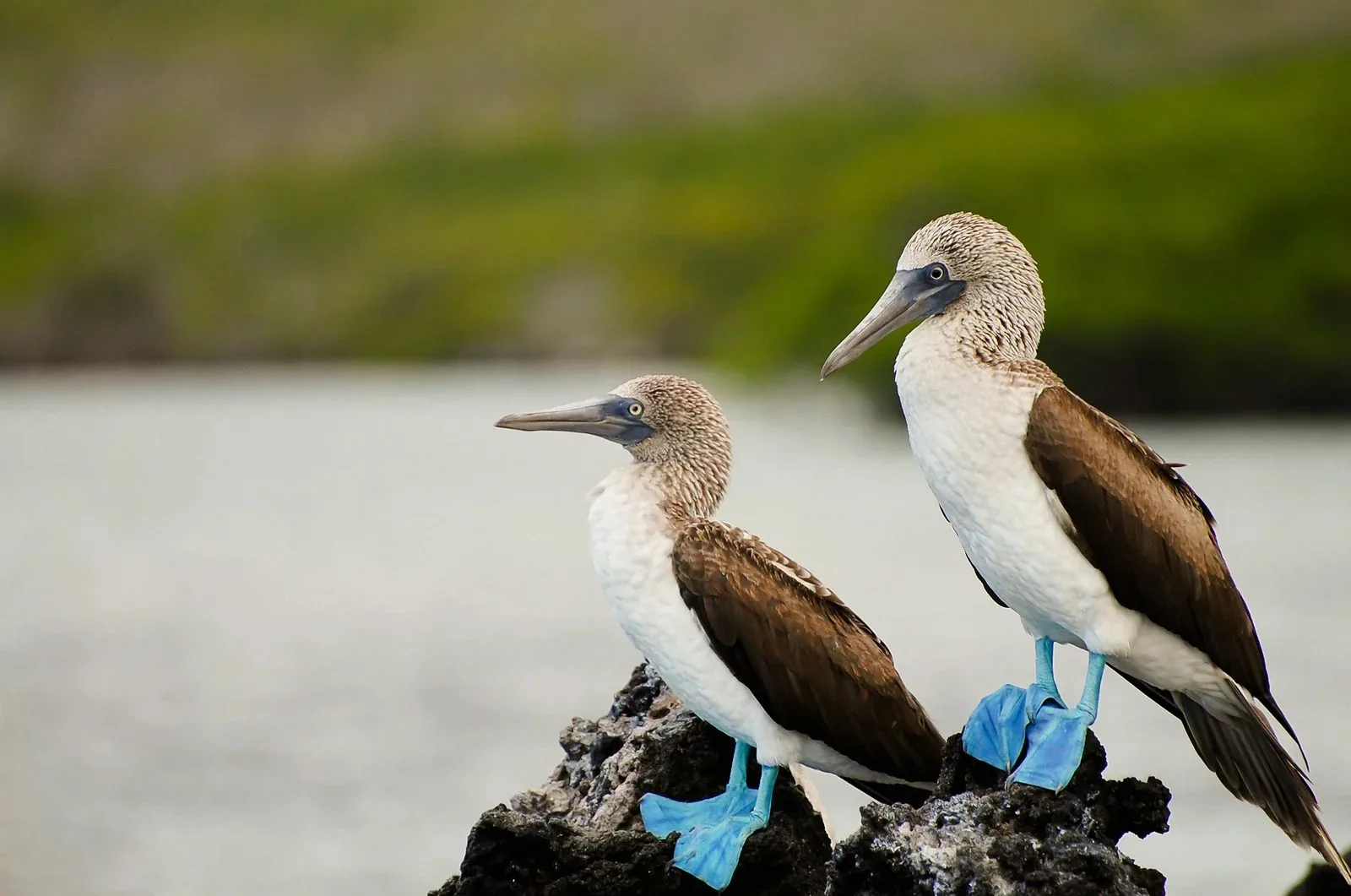
The wildlife also has very little regard for your itinerary. Sea lions sleep across jetties. Marine iguanas occupy the exact patch of rock you had planned to use. Blue-footed boobies carry on with whatever they were doing before you arrived. The animals evolved with very little fear of humans, which is exactly what makes the encounters so extraordinary, but it is also why visitor rules are taken so seriously.
Back on board, the pace slows considerably. There is time for lunch, the jacuzzi, a book on deck or a very committed afternoon of doing absolutely nothing before heading back out again. Menus are curated by Peruvian chef Pedro Miguel Schiaffino, with seafood and local produce playing a central role, and meals can be taken indoors or outside depending on the day.
Aqua Mare gives the Galápagos a level of comfort that is hard to argue with, but that is not really the most interesting part. What makes the journey work is that the yacht, the guiding and the conservation story all sit together.
Once you understand a little more about what these islands have already lost, and how much effort goes into protecting what remains, every wildlife encounter lands differently.
A giant tortoise is no longer just a photograph. A mangrove is no longer just greenery at the edge of the water. A hammerhead shark is not simply an exciting sighting.
They are all part of the same story: what survived, what adapted, what nearly disappeared, and what people are still working very hard to protect.
We’ll choose the right islands
Which itinerary includes the Marine Research Center, which suite to book, and how to add Quito or Peru either side.
Questions we’re often asked
How many guests does Aqua Mare carry?
16 guests across seven suites, with 16 crew and two naturalist guides.
Does Aqua Expeditions support conservation in the Galápagos?
Yes. Since 2024 Aqua has partnered with the Charles Darwin Foundation, supporting research into shark ecology, mangrove ecology and climate change.
Who designs the menus on Aqua Mare?
Menus are curated by Peruvian chef Pedro Miguel Schiaffino, with seafood and local produce at the centre.