Sitting on the western edge of Hudson Bay in northern Manitoba, around 1,000 kilometres north of Winnipeg, Churchill is a tiny town with a population of roughly 900–1,000 people and no road connecting it to the rest of Canada. You either fly in or arrive by train, which already gives you some idea of how remote it is. Its real claim to fame, though, is a little larger and considerably hairier.
Churchill is known as the Polar Bear Capital of the World, and every autumn hundreds of polar bears gather along this stretch of Hudson Bay waiting for the sea ice to form. Once it does, they can head back out onto the ice to hunt seals for the winter. From around mid-October to mid-November, an average of roughly 600 bears can be found along the Hudson Bay shoreline around Churchill. For such a small place, Churchill has developed some fairly unusual ways of living alongside them.
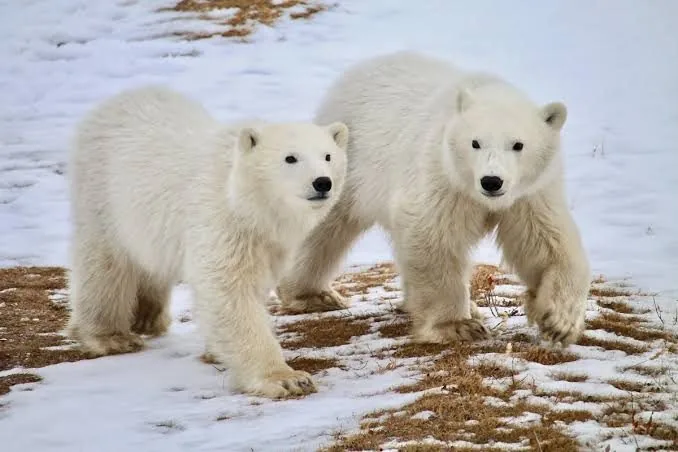
The reason the bears gather here is actually quite simple: they are waiting for their dinner table to freeze. During summer, the sea ice on Hudson Bay melts and the bears are forced ashore, where they spend months largely fasting. By autumn, they begin congregating around Churchill, waiting for the bay to freeze again so they can head back onto the ice and hunt seals. It means the entire rhythm of polar bear season is dictated by the weather, and every year is slightly different.
The town has a 24-hour Polar Bear Alert hotline with the easy-to-remember number: 675-BEAR. If a bear wanders into the town control zone, conservation officers will first try to encourage it back out using noise and other deterrents. Bears that repeatedly return, or pose a risk, can be captured and taken to the town's Polar Bear Holding Facility, inevitably known as the polar bear jail. Once Hudson Bay freezes, the bears are released back onto the ice.
So yes, Churchill genuinely has a polar bear jail.
And that isn't even the only slightly strange thing about living here.
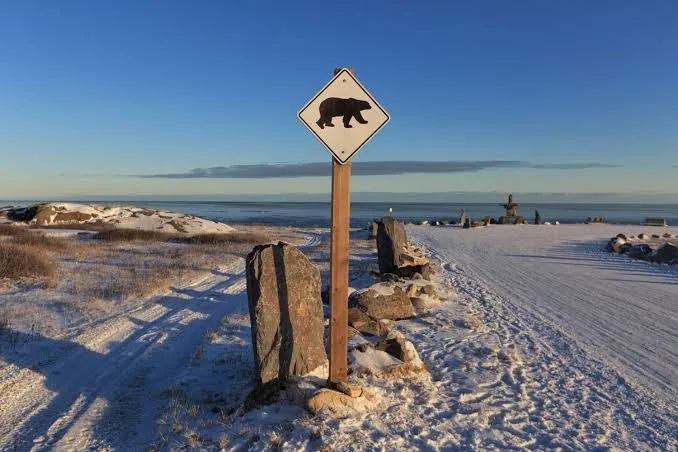
For years, Churchill has been associated with the tradition of leaving vehicles unlocked so someone caught outside near a bear has somewhere to take shelter. It isn't a quirky tourism stunt so much as a reminder that, in this part of Canada, a polar bear wandering through the outskirts of town is a very real possibility. Manitoba's own legislature has even referenced the practice of discouraging locked vehicles for precisely that reason.
The bears themselves are also far less cuddly than all those Christmas advertisements have led us to believe. A large male can weigh more than 600 kilograms and stand around three metres tall, yet they are surprisingly quick and agile. Their sense of smell is extraordinary too: they can detect scents from kilometres away and locate seals hidden beneath snow and ice.
It all makes Churchill one of those places where the wildlife isn't simply something you head out to see for the day. It shapes the rhythm of the town itself.
So, when should you go?
This is where Churchill gets interesting, because there isn't really one single polar bear season. What you see depends on when you travel.
October to November: The Classic Polar Bear Season
If the picture in your head involves polar bears walking across snow-covered tundra, this is when we would go.
From around mid-October through to mid-November, bears gather in their largest numbers along the coast waiting for Hudson Bay to freeze. October and November are considered the peak viewing months, and it is during this period that you have the best chance of seeing multiple bears, including animals interacting with one another as they gradually congregate near the shoreline. The landscape is also beginning to look properly Arctic by then. Temperatures drop, snow arrives and the tundra changes almost daily as winter moves in.
There is one important trade-off: the later you travel, the colder and more wintry it tends to be, but if the sea ice forms early enough, some bears may begin heading out onto Hudson Bay. Nature remains very firmly in charge of the timetable.
July to September: Polar Bears without quite so much winter
Churchill also has a summer polar bear season. Bears begin coming ashore as Hudson Bay's ice melts from around July, and they can be seen along the coast through summer and into early autumn. Numbers are generally lower and the landscape is completely different, with open water and tundra rather than the snowy backdrop most people associate with Churchill. The advantage is that summer gives you the chance to combine polar bears with another of Churchill's great wildlife spectacles: beluga whales, which gather in huge numbers around the Churchill River and Hudson Bay.
If your sole reason for going is to see polar bears in that classic Arctic setting, though, I would still choose late October into early November.
How we would experience it:
Churchill is not really somewhere I would recommend piecing together independently. The season is short, the logistics are unusual and the real value comes from having enough time out on the tundra rather than simply arriving and hoping for the best. The programme we like best runs during October and November and is built around five nights, with time in Winnipeg either side and three nights in Churchill itself. Flights between Winnipeg and Churchill are included, which takes a lot of the logistical guesswork out of getting somewhere this remote.
The accommodation in Churchill suits the destination perfectly. It is warm, comfortable and full of character, with a proper northern lodge feel rather than trying to be an overly polished luxury hotel in the middle of the sub-Arctic. After a full day outside, you come back somewhere cosy, have dinner, warm up and do it all again the next morning.
The real reason we like this particular itinerary, though, is that it gives you two full days out on the tundra.
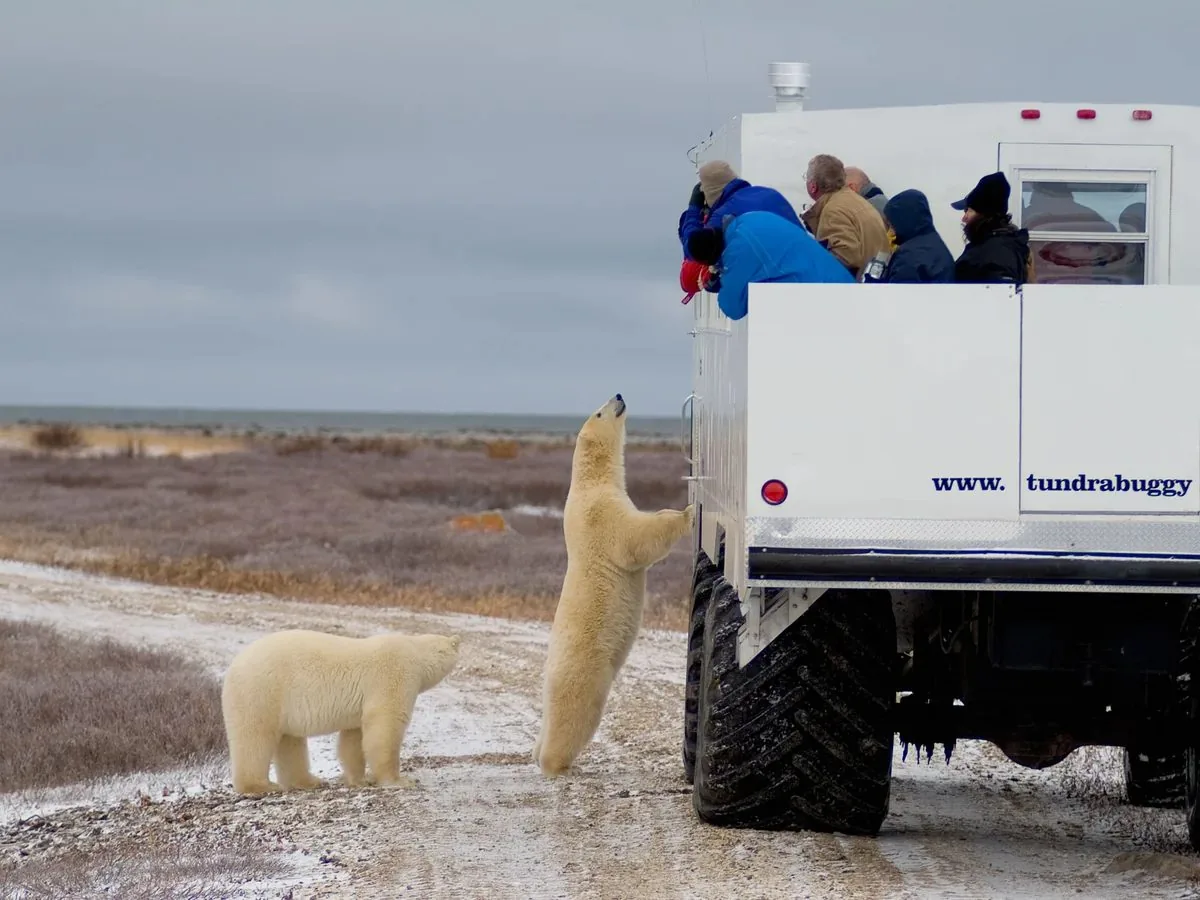
You head into the Churchill Wildlife Management Area in purpose-built tundra vehicles, which sit high off the ground on enormous tyres and are designed specifically for wildlife viewing in this environment. Large windows and elevated viewing areas mean you can stay out for the day and watch the landscape properly rather than constantly heading back into town. And you need that time.
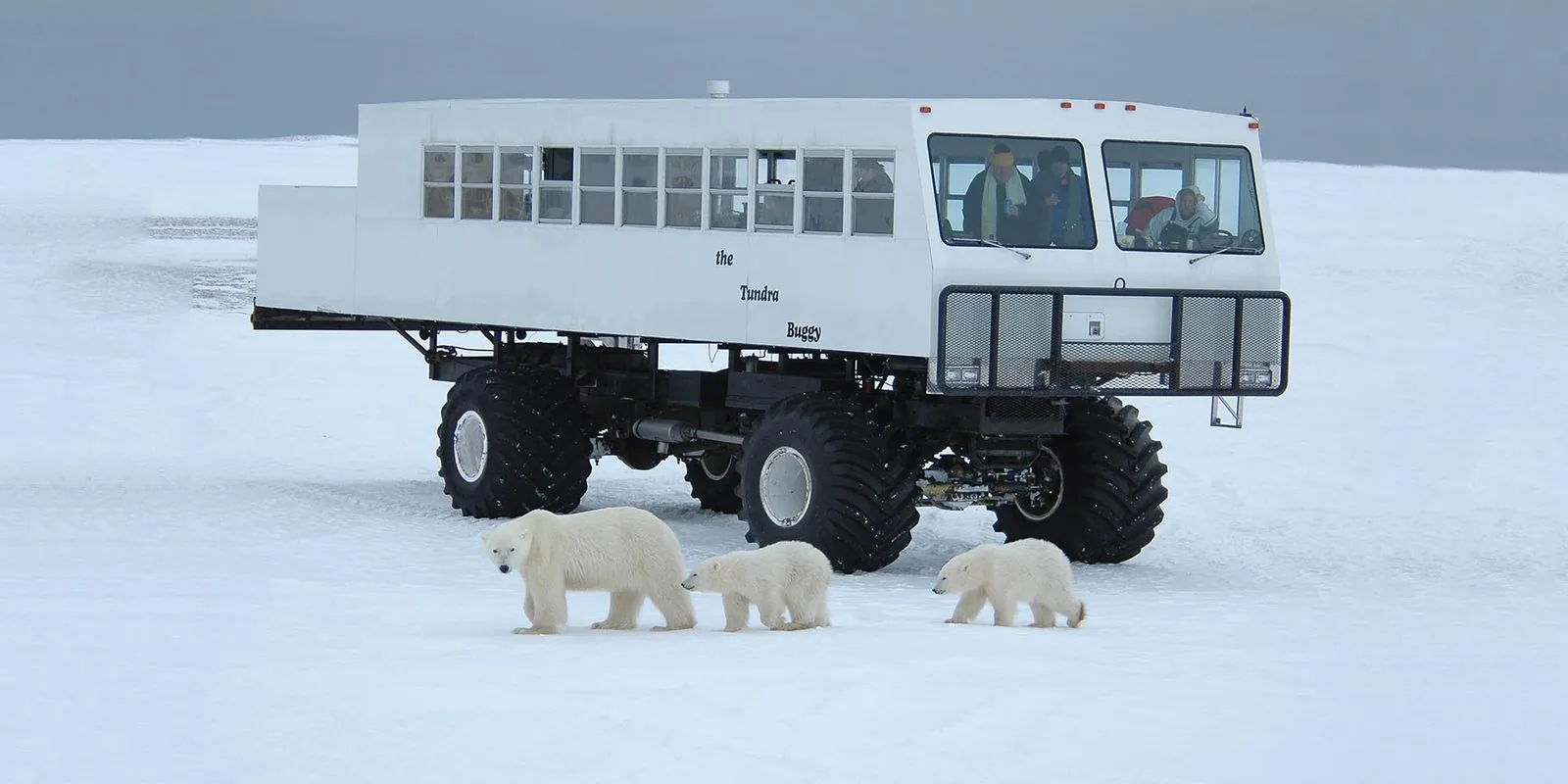
Wildlife viewing here is not about driving straight to a known location, ticking off a polar bear and heading home. You move slowly across the tundra, watching the shoreline, frozen ponds and willow scrub for movement.
Sometimes the bears are a long way off.
Sometimes they are asleep.
Sometimes two younger bears begin sparring.
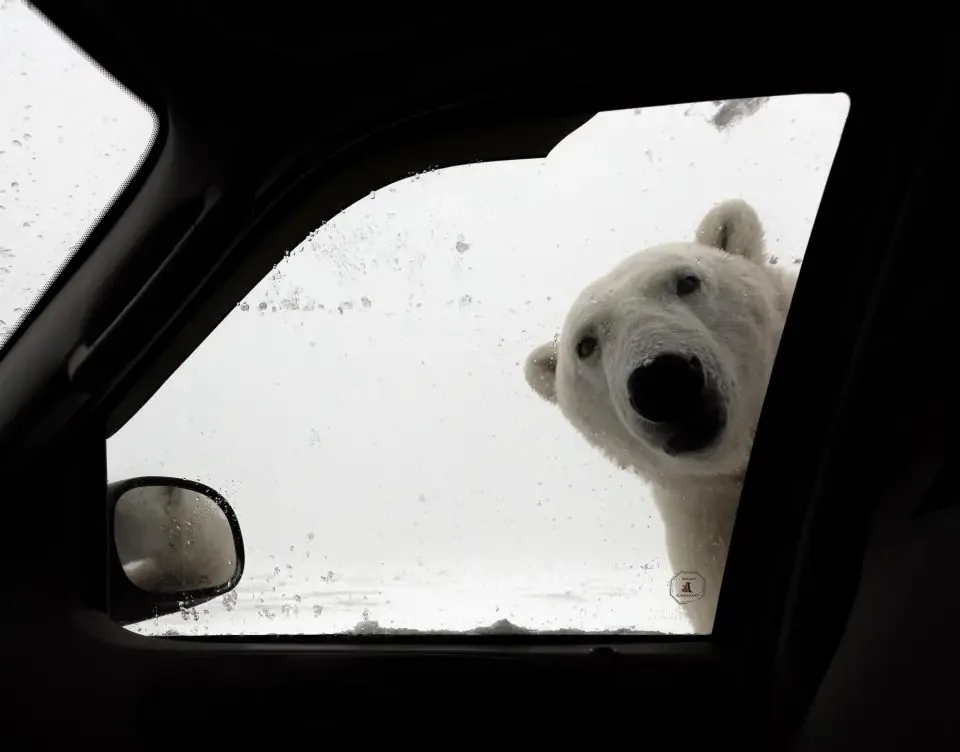
And occasionally curiosity gets the better of one and it wanders straight over to investigate the very strange vehicle full of humans staring back at it.
That is the part you cannot really manufacture.
Having two full tundra days also matters because wildlife is never predictable. If your first day is quieter, you have another opportunity the following day. In a destination where weather, sea ice and the bears themselves decide almost everything, I would always rather build in more than one proper day in the field.
The trip is not entirely about the bears either.
There is time to explore Churchill itself and understand what life is actually like in a town where polar bears are part of everyday conversation. You visit places such as Cape Merry, see the wreck of the aircraft nicknamed Miss Piggy, and stop outside the Polar Bear Holding Facility, which by this point in the trip somehow starts to seem almost normal.
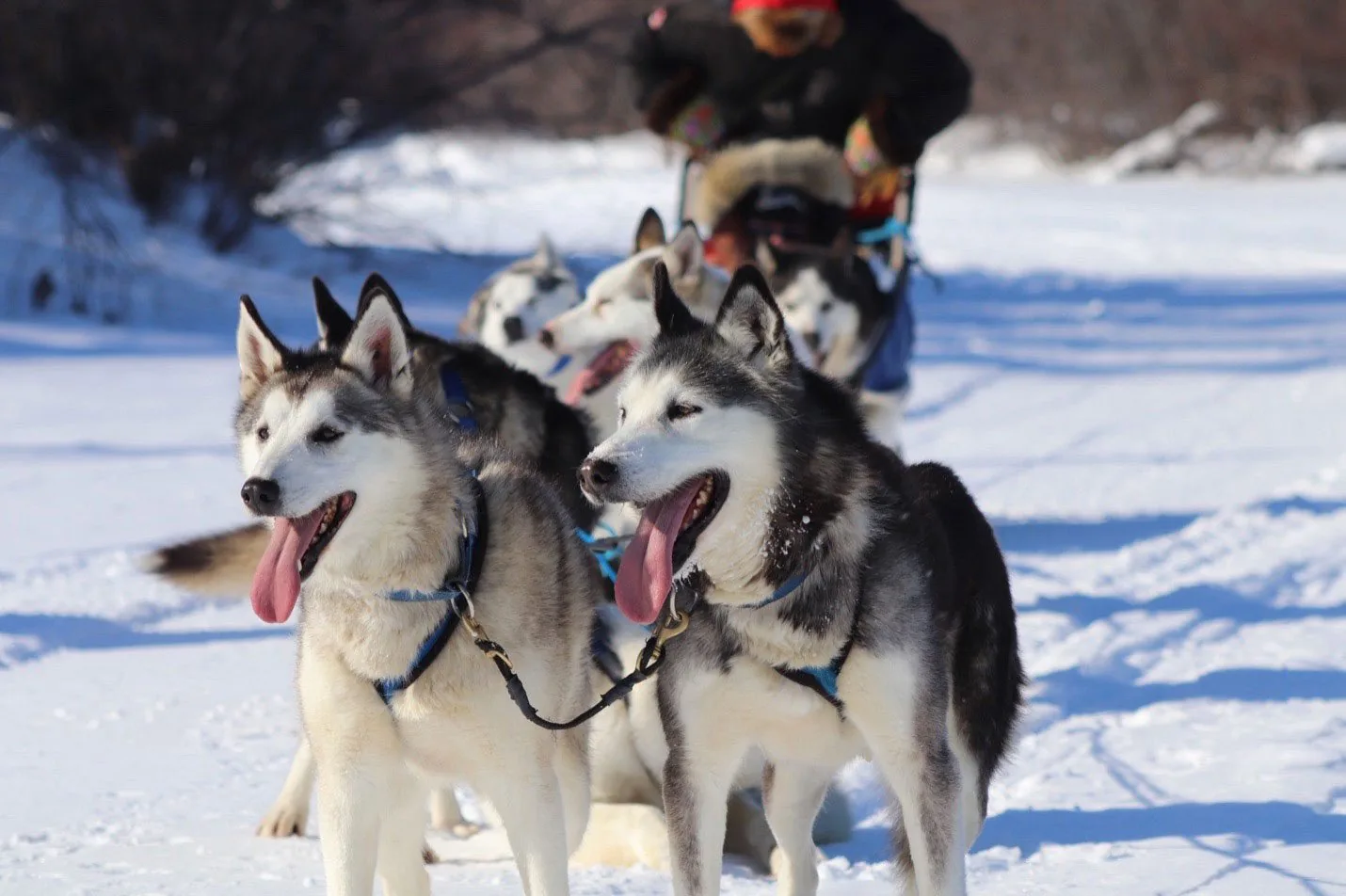
There is also a dog-mushing experience through the boreal forest. If there is enough snow you head out by sled; if winter has not quite arrived yet, the dogs run with wheeled rigs instead. Either way, it is a very northern Canadian experience and a nice change of pace between days on the tundra.
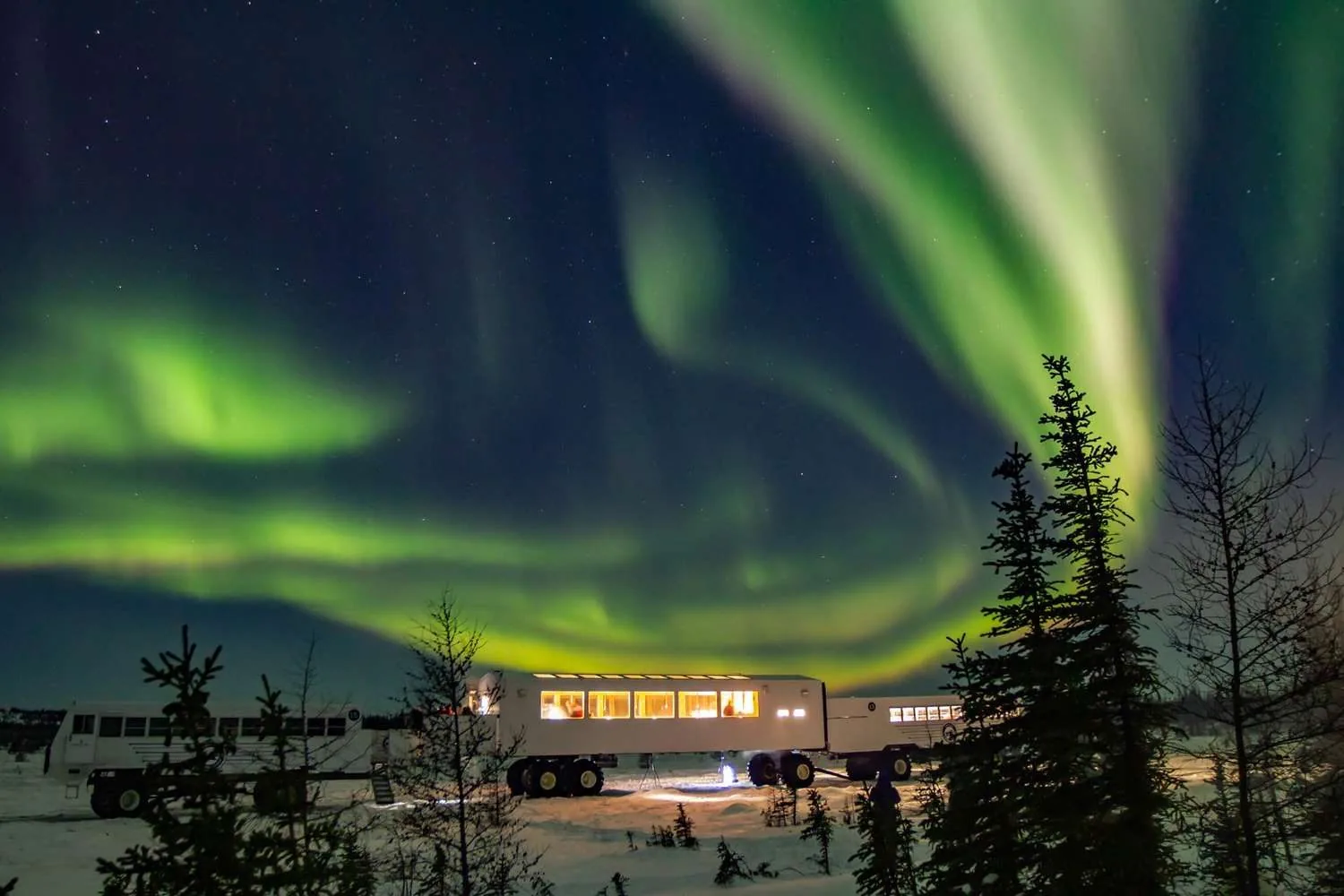
And then, if the skies cooperate, there is always the possibility of the Northern Lights.
Nothing involving the aurora can ever be guaranteed, but Churchill is extremely well positioned for it, so there is a genuine chance that after a day spent watching polar bears you could step outside that evening and find the sky doing something fairly ridiculous above you.
The programme includes the return flights between Winnipeg and Churchill, accommodation in both Winnipeg and Churchill, two full tundra excursions, sightseeing around Churchill, dog mushing, guiding and meals during the Churchill stay. It is the sort of itinerary I like because the logistics are taken care of, but it still feels adventurous.
Why this one? Because it gets the balance right.
You have enough time on the tundra for the polar bears to remain the main event, but you also come away understanding Churchill itself. You see how a tiny northern community has learnt to coexist with an animal that can weigh more than half a tonne, you visit a polar bear jail that really should not sound as normal as it does after a few days here, and you spend your days watching the edge of Hudson Bay slowly turn towards winter.
There are certainly more luxurious wildlife trips in the world but that is not really the point of Churchill.
You come here because very few places still allow you to sit quietly in a vast landscape, watch one of the world's great predators wander towards you, and know that you are very definitely visiting their world rather than the other way around.
We’ll pick the right week
Peak bear season is short and books out early. We’ll match the departure to what you want to see, and handle the logistics of getting somewhere this remote.
Questions we’re often asked
When is the best time to see polar bears in Churchill?
Mid-October to mid-November, when bears gather in the largest numbers along Hudson Bay waiting for the sea ice to form. Summer (July to September) brings fewer bears but adds beluga whales.
How do you get to Churchill, Manitoba?
There is no road to Churchill. You fly in, usually from Winnipeg, or arrive by train.
How many days do you need in Churchill?
We recommend at least two full days out on the tundra, because weather, sea ice and the bears themselves decide almost everything.