For most travellers, we would focus on Sabah, in Malaysian Borneo, because it gives you a really good mix without making the trip feel too rushed. You can start around Sepilok with the orangutan rehabilitation story, move on to the Kinabatangan River for wildlife by boat, then finish much deeper in the rainforest in Danum Valley.
The Orangutans
The name orangutan comes from orang hutan, meaning “person of the forest”, and once you see one moving through the trees, it makes complete sense. Bornean orangutans spend most of their lives in the canopy, moving slowly through the forest in search of fruit, leaves and bark. They are largely solitary, particularly the adult males, and they build themselves a new nest in the trees every night to sleep in.
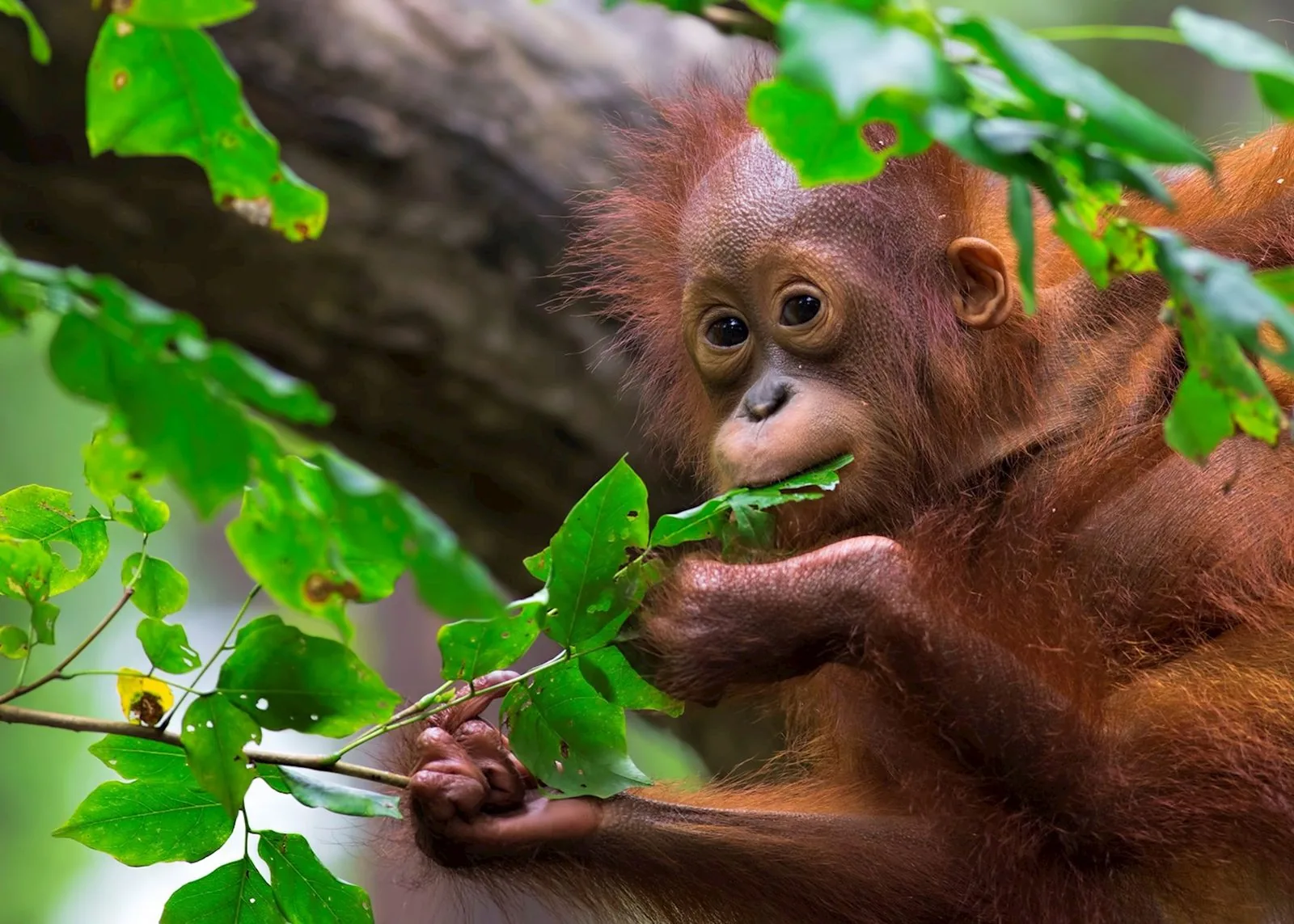
They also share around 96% of their DNA with humans, which is one of the reasons responsible viewing is so important. Human illnesses can be passed to them, so places such as Sepilok are very strict about keeping your distance and never touching the animals.
Sepilok Orangutan Rehabilitation Centre has been operating since 1964 and works with orphaned and displaced orangutans, gradually helping them return to independent life in the surrounding forest. There are twice-daily supplementary feeding sessions, but sometimes no orangutans turn up at all.
That might sound like a disappointing morning, but it can actually be a very good sign. It may simply mean they have found enough food naturally and do not need to come in for feeding. That is exactly how we think wildlife should be viewed. You are there to see them. They are not there to put on a show.
And then there is everything else.
One of the best things about Borneo is that the animal you barely thought about before you left can end up being the one you talk about afterwards.
Proboscis monkeys are a very good example. The males have enormous noses, big pot bellies and a look that suggests evolution had a bit of fun with them. They are found only on Borneo and are particularly common around the Kinabatangan River, where you will often see troops feeding or moving through the trees close to the water.
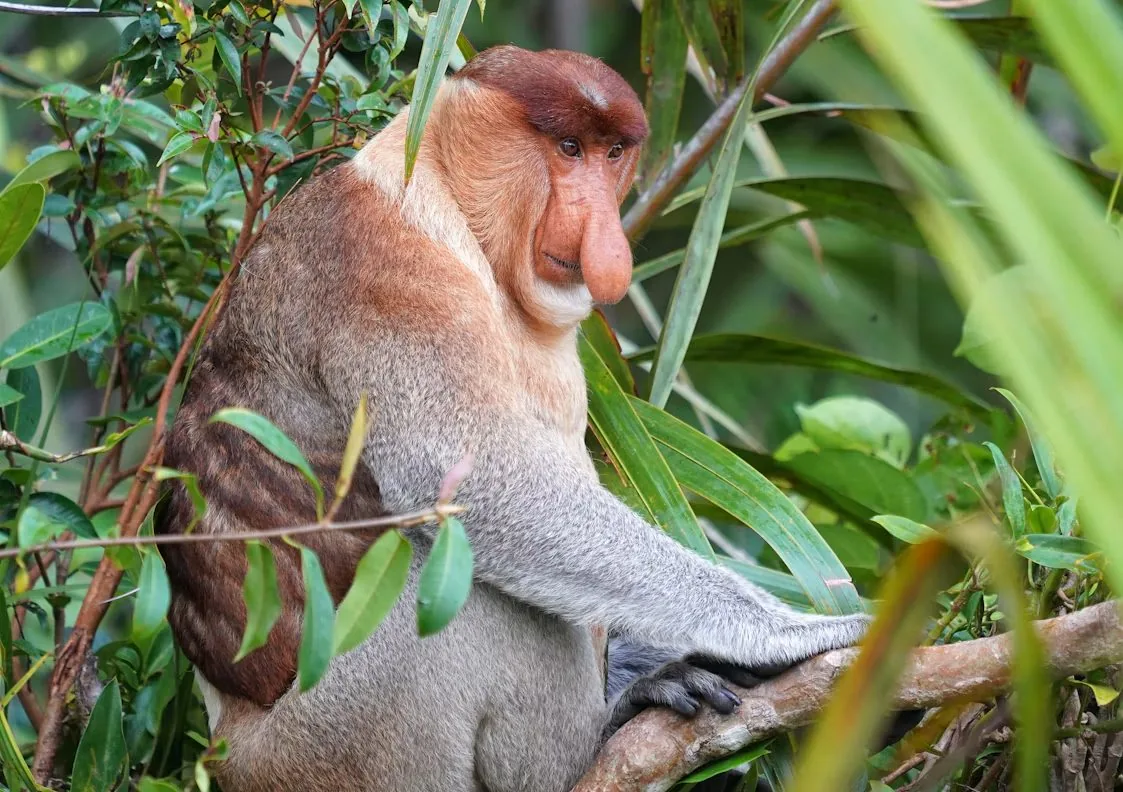
The Kinabatangan itself is one of Sabah's richest wildlife areas. It is Malaysia's second-longest river at around 560 kilometres, and the surrounding forest is one of only two known places in the world where ten species of primates occur. Along with orangutans and proboscis monkeys, you have macaques, gibbons, crocodiles, hornbills and, if you are lucky, Bornean pygmy elephants.
The elephants are one of the big prizes here. Bornean pygmy elephants are the smallest Asian elephants, with relatively large ears, longer tails and a more rounded appearance than their mainland relatives, and they are found only in Borneo. Small is obviously relative when we are still talking about an elephant, but they do look noticeably different.
They move through the forest in family groups, often following established routes between feeding areas and water. If a herd comes down to the river to drink or feed, you can sometimes get a very close view from the boat. Nothing is guaranteed, but if word gets around that elephants have been seen nearby, plans have a habit of changing fairly quickly.
Sun bears are another favourite. They are the smallest bears in the world and are easily recognised by the pale crescent-shaped marking on their chest, which is unique to each individual. They are excellent climbers and spend much of their time in the trees looking for fruit, honey and insects. They also have an incredibly long tongue, which comes in handy when raiding termite nests and digging into logs for food.
Tarsiers are completely different again. These tiny nocturnal primates have huge eyes, long fingers and can leap surprisingly long distances between branches in the dark. They mostly feed on insects and other small animals, and finding one on a night walk can take some serious spotting considering how unmistakable they look once you actually see one.
By this point, you start to realise just how much wildlife can be packed into one trip.
Borneo is tropical, so there is no perfect dry season. It is hot, humid and rain is possible throughout the year, but for this style of trip we would generally look at April through to October, with May to September being a particularly good window. The drier months make the walking and river trips a little easier, but we would never promise you a rain-free Borneo trip. It is rainforest, after all. A tropical downpour is very much part of it, and once it passes the forest seems to wake up all over again.
We would start around Sepilok, near Sandakan, with time at both the orangutan rehabilitation centre and the nearby Bornean Sun Bear Conservation Centre.
From there, we would continue to the Kinabatangan River for two or three nights. The river runs for around 560 kilometres from the interior of Sabah to the Sulu Sea, and the lower section is one of the richest wildlife areas in Borneo. The floodplain is made up of river channels, forest, wetlands and oxbow lakes, which is exactly why so many different species are concentrated here. It is also one of only two known places in the world where ten species of primates are found, and all eight species of hornbill found in Borneo occur in the area.
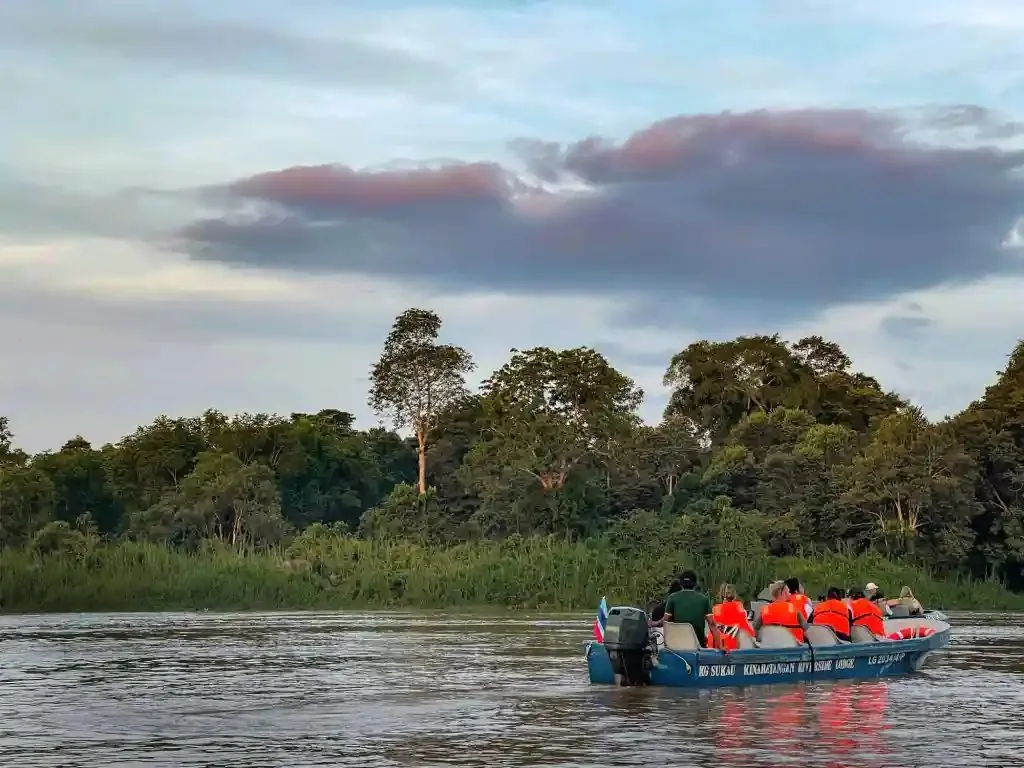
Most wildlife viewing is done from a small boat, which is one of the reasons the Kinabatangan works so well. You head out early in the morning and again later in the afternoon, slowly following the river while your guide watches the banks and canopy. The forest comes right down to the water in places, so you can get very good views without having to push through dense jungle on foot.
You might spend ten minutes watching proboscis monkeys in the trees, turn the next corner and have a rhinoceros hornbill fly overhead, then spot a crocodile on the bank or an orangutan feeding above the water. The river is also one of the better places to look for Bornean pygmy elephants, particularly when herds move through the floodplain and come down towards the water.
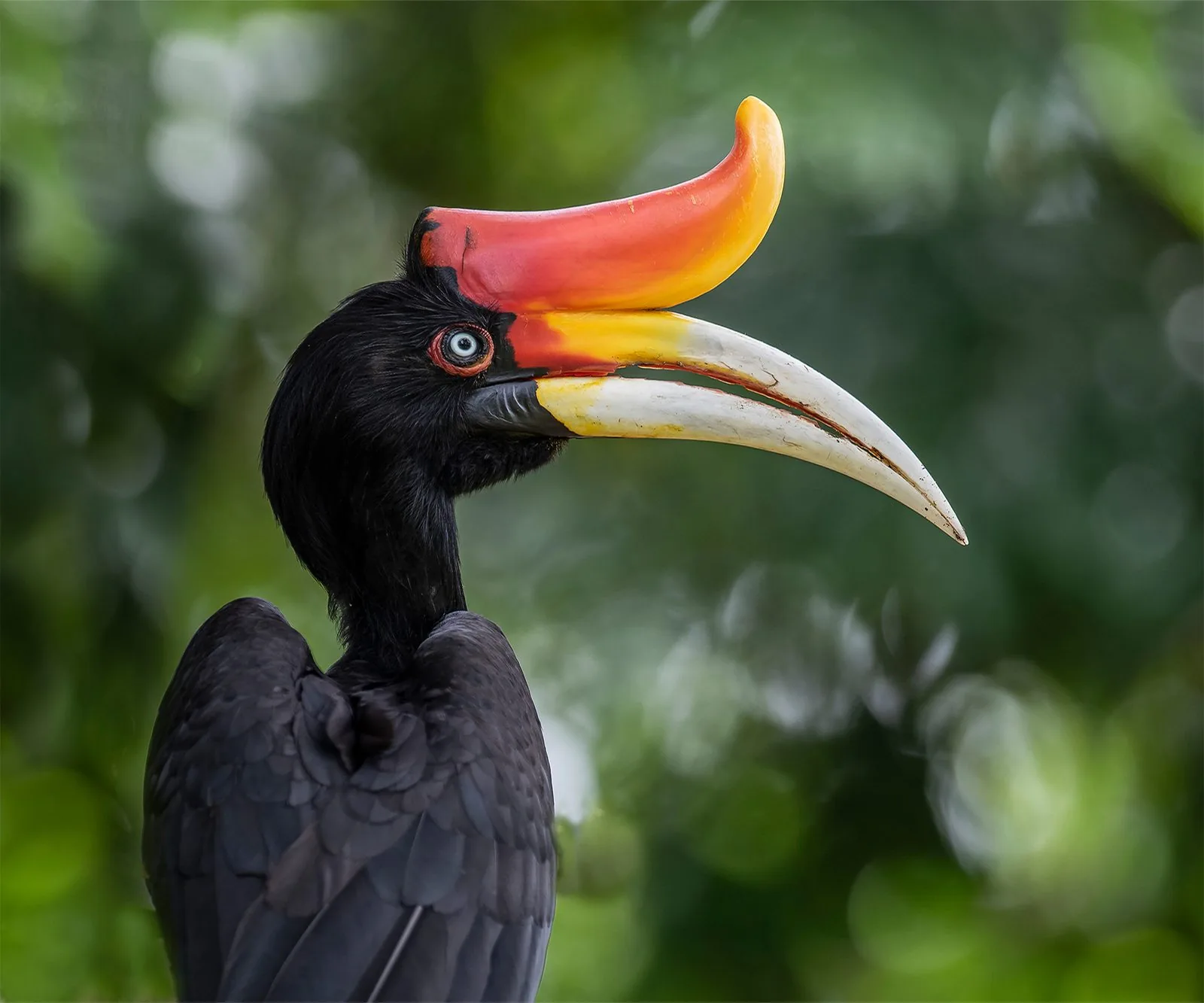
There is no need to rush it. You sit in the boat, watch the riverbanks and see what turns up. And if somebody hears that elephants have been spotted further along the river, things can suddenly become a little less leisurely.
From the Kinabatangan, we would continue on to Danum Valley, which is where the trip becomes much more about being properly inside the rainforest.
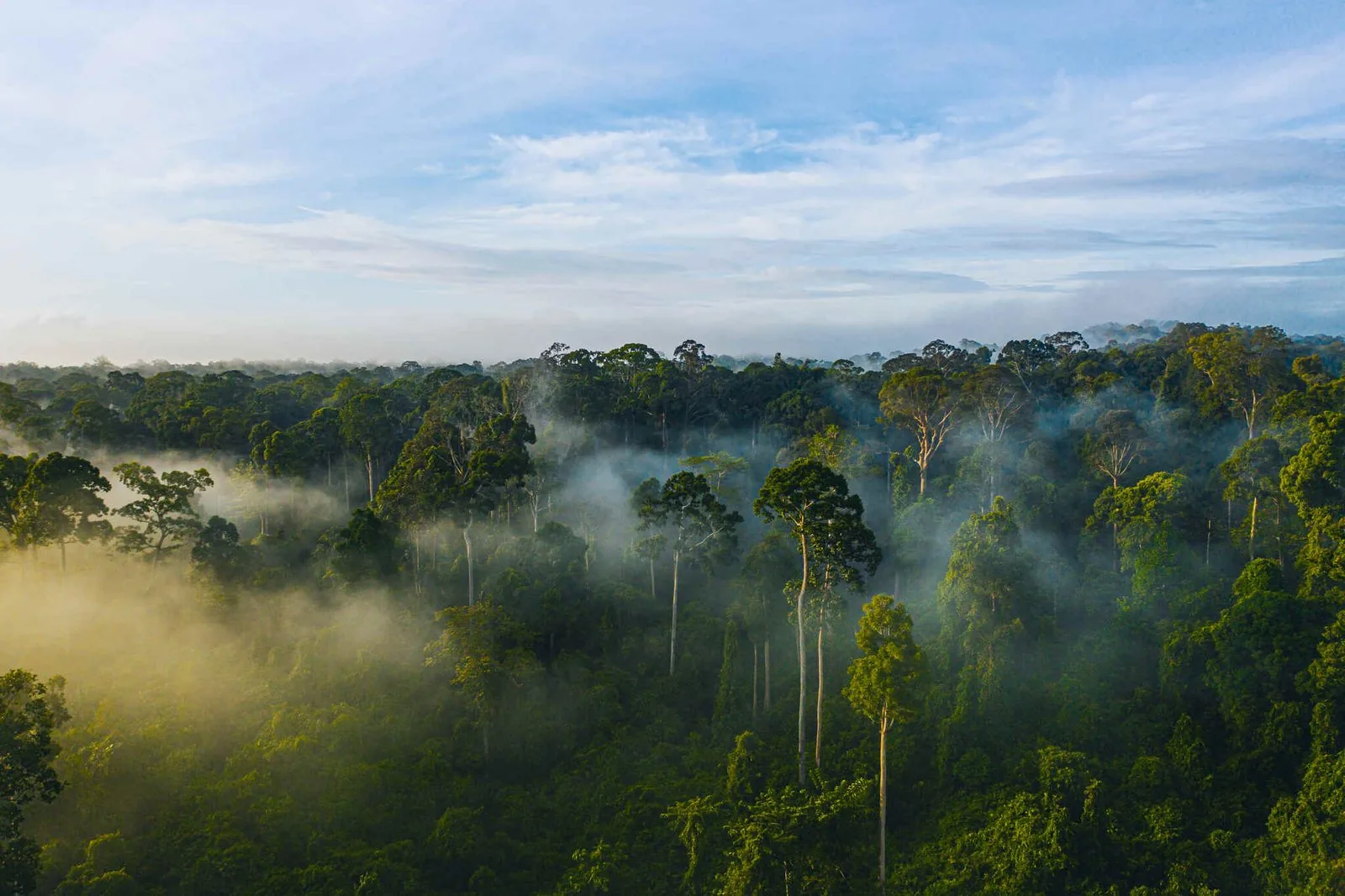
The Danum Valley Conservation Area protects around 438 square kilometres of primary lowland rainforest, much of it never logged. It is one of the most important protected forest areas in Sabah, with wild orangutans, Bornean pygmy elephants, red leaf monkeys, gibbons, sun bears, Sunda clouded leopards and more than 300 species of birds living within it. The forest itself is incredibly old too, with estimates putting parts of it at around 130 million years.
What makes Danum feel so different from the Kinabatangan is the way you experience it. On the river, wildlife often comes to you. Here, you are heading out on foot with a guide, looking up into the canopy, listening for movement and spending much more time trying to work out exactly where something is. The wildlife here is completely wild, with no feeding platforms or fixed viewing times. Some walks will be busier than others, but when you do find an orangutan or a troop of monkeys high in the trees, it feels much more earned.
This is also where we would stay at Borneo Rainforest Lodge, right on the Danum River inside the conservation area. The lodge has just 31 chalets and is reached by road from Lahad Datu, around two and a half hours away, so by the time you arrive you really do feel removed from everything else.
Most days revolve around the forest. You head out with naturalist guides on walking trails, look for wildlife in the canopy, and cross the lodge’s canopy walkway, which stretches for around 360 metres and reaches roughly 27 metres above the forest floor. It puts you much closer to the level where hornbills and primates are moving through the trees, and gives you a completely different view of how dense the forest actually is.
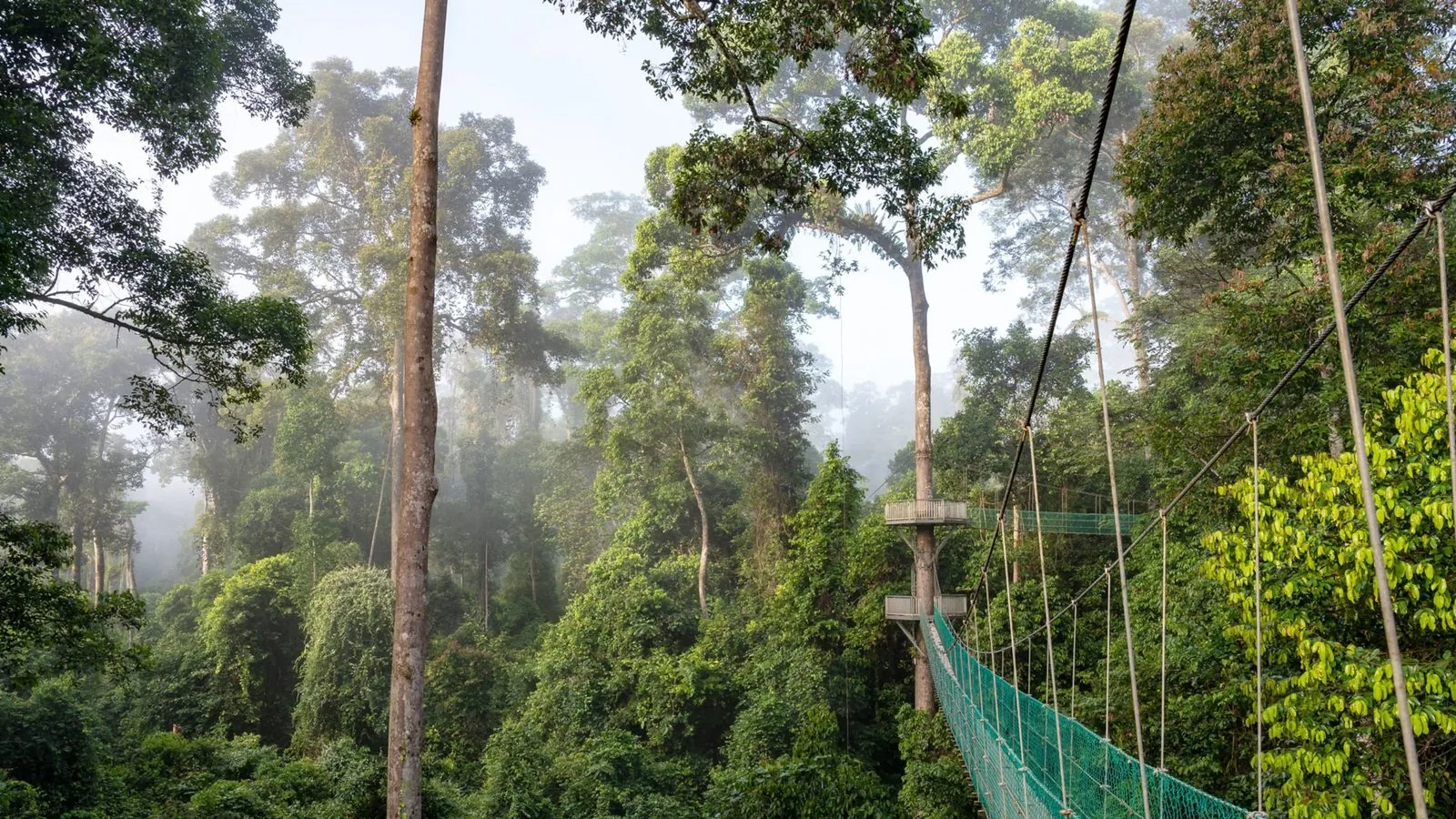
Then at night, the focus changes again. Guided walks and drives can bring out civets, flying squirrels, frogs, tarsiers and, with a lot of luck, some of the rarer nocturnal species. The daytime and night-time wildlife are so different that we would always want enough time here to do both properly.
Borneo Rainforest Lodge itself is exactly the sort of place we would want to stay here. The chalets sit among the trees beside the river, and the higher room categories give you more space, larger verandahs and, in some cases, private plunge pools overlooking the rainforest. You are still very much in Danum Valley, but after a few hours walking in the heat and humidity, having somewhere comfortable to come back to is definitely appreciated.
We would allow at least three nights here, and ideally four if you have the time. Danum is not somewhere we would rush. The longer you stay, the more chances you have to see the forest at different times of day, and the better your odds of those really good wild sightings.
By the time you leave, the orangutans are still a huge part of why you came, but they are definitely not the only thing you end up talking about. It might be the morning you find elephants along the Kinabatangan, proboscis monkeys making a complete racket above the river, a hornbill flying straight across the boat, or finally spotting a tarsier after staring into the dark for what feels like forever.
That is probably what we like most about Borneo. The wildlife is incredibly varied, but the experience never feels like you are simply moving from one guaranteed sighting to the next. Some things are relatively easy to find, some take much more patience, and occasionally the animal you were hoping for simply does not turn up.
The orangutans may be what first gets Borneo onto your list, but by the time you leave, there is usually a lot more you are talking about.
We’ll give the forest enough time
How many nights on the river and in Danum, which chalet category to choose at Borneo Rainforest Lodge, and how to fit in the night walks.
Questions we’re often asked
When is the best time to visit Borneo for wildlife?
April to October, with May to September a particularly good window. It is rainforest, so rain is possible year-round.
Where can you see orangutans in Borneo?
At Sepilok Orangutan Rehabilitation Centre near Sandakan, along the Kinabatangan River, and wild in Danum Valley.
Where do you stay in Danum Valley?
We recommend Borneo Rainforest Lodge, 31 chalets on the Danum River inside the conservation area, for at least three nights.