Most trips to the Seychelles barely scratch the map. Mahé, Praslin and La Digue get most of the attention, understandably, but the country stretches far beyond them into a scattering of remote coral atolls and protected islands that very few travellers ever reach.
Some sit hundreds of kilometres from the nearest resort, with more tortoises, seabirds and reef life than people. They are harder to get to, much less developed and, for us, considerably more interesting.
Thirty guests, thirty-two crew
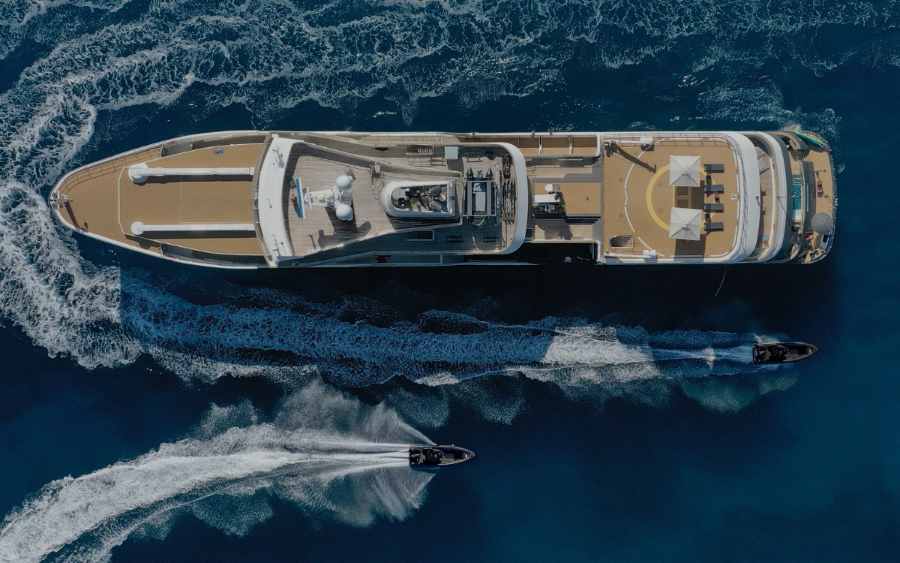
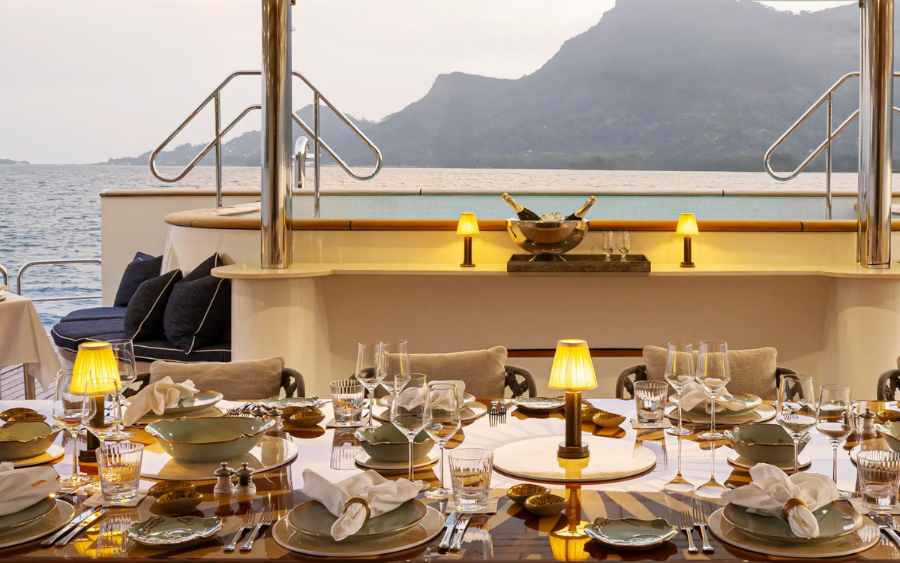
Aqua Lares carries only 30 guests, with 32 crew, which are numbers we are quite happy with on holiday. It feels much closer to travelling on a private yacht than being on a cruise ship, with just 15 suites, excellent food, plenty of space and the sort of service you would expect when there are more crew than guests.
We would recommend Aqua because the focus is not really on staying onboard. The expedition team travels with you throughout, and most days involve some combination of snorkelling, diving, kayaking, exploring by tender or going ashore with the guides. Aqua Lares is very comfortable to come back to, but she is really there to get you into places that would otherwise be extremely difficult to reach. The days are kept deliberately flexible too. If the snorkelling is particularly good somewhere, you can stay longer. If wildlife appears where nobody expected it, plans can change. Out here, it makes far more sense to work with the conditions than stick rigidly to a timetable written months earlier.
Eleven nights, finishing in Tanzania
Of Aqua’s Seychelles journeys, we would recommend the 11-night The Coralline Seychelles & Tanzania itinerary, travelling from Mahé through the remote outer islands of the Seychelles before finishing in Zanzibar. Rather than exploring the Seychelles and eventually making your way back to Mahé, you continue west across the Indian Ocean and finish in Tanzania. We would spend a few nights in Zanzibar afterwards and continue straight into safari from there. It means the cruise becomes part of a much bigger East African trip, without having to double back before moving on.
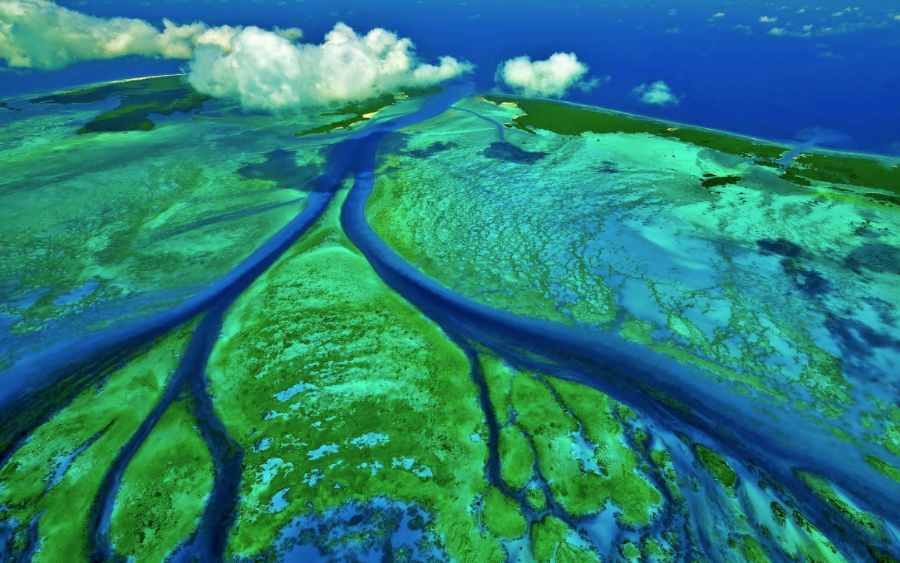
The opening part of the voyage shows you just how different the outer Seychelles are from the islands most people know. Shallow lagoons, sand flats, mangroves and reef systems replace the granite scenery around Mahé and Praslin, and you spend a lot of time in or around the water. Turtles, rays, sharks and huge schools of tropical fish are not just occasional sightings here. They are simply part of the environment.
Further south, the islands become much more remote, with very little infrastructure and even fewer people. Very little has been built here, and very little has been changed.
Some of the reef systems are extraordinary. Astove’s famous underwater wall drops sharply into deeper water, attracting sharks, rays, turtles and huge schools of fish, while Cosmoledo is known for its seabird colonies, nesting turtles and remarkably healthy reefs.
These are not places you visit because somebody has built something worth seeing. In many cases, the complete lack of anything built is the reason to be there.
One of the world’s largest raised coral atolls
Aldabra would be the part we would be most excited about. It is one of the world’s largest raised coral atolls, made up of four main islands surrounding an enormous lagoon, and it is not easy to visit. There are no hotels, no real tourism infrastructure and very little human presence beyond a small scientific research station. That isolation is a big part of why the ecosystem has remained so intact.
More than 100,000 giant tortoises live here, the largest population anywhere in the world. Rather than seeing a handful inside a reserve, you are walking through a place where tortoises are simply part of the landscape. Aldabra is also home to green and hawksbill turtles, huge seabird colonies and its own flightless rail, the last surviving flightless bird in the western Indian Ocean. It is probably one of the few places where being dramatically outnumbered by giant tortoises feels entirely reasonable.
There is just as much happening below the surface. Aldabra’s lagoon is connected to the open ocean by narrow channels, and every change of tide pushes huge volumes of water through them, bringing nutrients, fish and predators with it. Sharks, rays, turtles and enormous schools of fish gather in and around these channels, and Aqua times its excursions around the tides so you can explore the waterways by tender and, when conditions are right, snorkel alongside the marine life moving between the lagoon and open ocean.
A day at sea, then Mafia Island
After several very active days, the full day at sea on the crossing towards Tanzania is actually very well timed. By this point there has been a considerable amount of snorkelling, tenders, kayaks and getting on and off beaches, so having absolutely nowhere you need to be for a day starts to sound pretty good. It also gives you time to actually enjoy Aqua Lares rather than simply using her to get from one island to the next.
Mafia Island is a very good first introduction to Tanzania and keeps the wildlife focus going as you cross into East Africa. The island is much quieter than Zanzibar and surrounded by some of the richest marine environments in the region, with coral reefs, turtles and huge numbers of tropical fish throughout the area.
Mafia is also one of Tanzania’s best places for whale shark encounters. The waters around Kilindoni Bay are visited seasonally by these enormous, completely harmless fish, and when they are in the area there is the chance to get into the water and snorkel alongside them. It is wildlife, so nobody sensible is going to promise they will appear on cue, but the opportunity to swim beside the largest fish in the world is a pretty special way to arrive in East Africa.
The final days around Mafia are a little more relaxed, with time around Chole Bay and Mange Sandbank. There is still plenty of snorkelling, diving and kayaking, but also more room to simply enjoy the water and the setting without feeling the need to turn every hour into an activity.
Zanzibar, then straight into safari
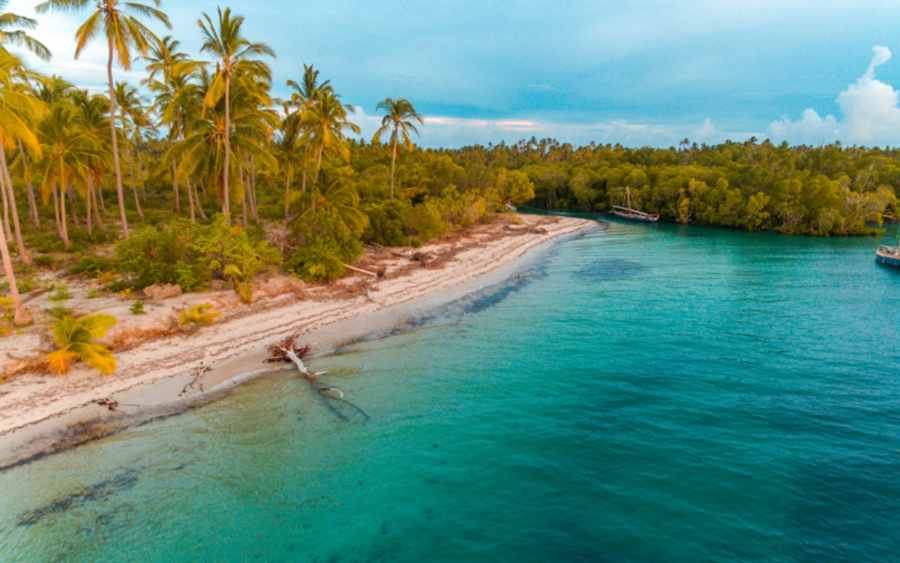
We would definitely spend a few nights in Zanzibar rather than treating it as somewhere to simply disembark. After days spent around islands with tiny or non-existent permanent populations, suddenly you have Stone Town, markets, restaurants, Swahili food and centuries of African, Arab and Indian influence. It gives the trip a completely different finish.
From here, continuing into safari is easy.
For a first trip, we could take you into Ngorongoro and the Serengeti for the classic East African safari experience. If you have been before, Nyerere and Ruaha would give you something quieter and more remote and would follow on really well from the style of the cruise.
That is really why this is the Aqua itinerary we would choose.
You get into a part of the Seychelles that most people never see, including Aldabra, which alone makes the journey interesting enough to consider. You travel with just 30 guests, cross the Indian Ocean into Tanzania, spend a few days in Zanzibar and then continue directly into safari.
Rather than feeling like a cruise with another holiday added onto the end, the whole thing joins together properly.
The safari we would put on the end of it
If you are heading into Tanzania after Zanzibar, this is the classic first-time itinerary we would build: Arusha on foot, two nights in the Ngorongoro Highlands, canvas in the central Serengeti and contemporary African art in the west.