There are hundreds of ways to experience Tanzania. You can race from one famous park to the next, collect the Big Five, take approximately 4,000 photographs of lions and return home feeling like you have seen an impressive amount of Africa in a remarkably short period of time. Plenty of itineraries do exactly that.
But if one of my closest friends called tomorrow and told me they were planning their first East African safari, this isn’t the trip I’d build around a checklist. I’d build it around the places I’d genuinely want them to experience. The sort of places where you remember the camp almost as clearly as the wildlife, where moving from one region to the next actually changes the experience rather than simply changing the name at the top of the itinerary, and where you occasionally have time to sit down, order another coffee and remember you are actually on holiday.
If I could recommend just one classic Tanzanian safari for a first visit, this would probably be it.
Arriving properly, at walking pace
It begins at LABA Mama Simba, just outside Arusha, which I think is a far better introduction to Tanzania than landing at Kilimanjaro and immediately being bundled onto another flight while your body is still somewhere over the Indian Ocean. After roughly 24 hours of airports, queues, aeroplane meals and questionable attempts at sleeping upright, two nights here gives you the chance to arrive properly.
And Mama Simba is far more than a convenient place to recover. Just 35 minutes from Kilimanjaro International Airport, the lodge sits within the 700-hectare North Dolly Conservancy, where zebra, wildebeest, impala, Grant’s gazelle and Cape eland wander freely through the surrounding bush. Most safaris begin with someone handing you a pair of binoculars. Here, they begin with a walk.
Accompanied by a Maasai guide, you can head out through the conservancy on foot, learning how to read tracks, notice the smaller things and understand the landscape in a completely different way to what you’ll experience from a safari vehicle over the days ahead. There is something rather lovely about your first wildlife encounter in Africa happening at walking pace rather than through the open window of a Land Cruiser.
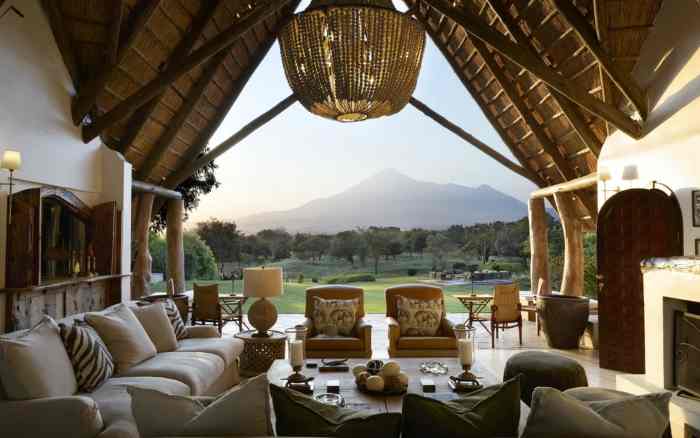
With only nine rooms, Mama Simba feels more like a beautifully considered country retreat than a traditional safari lodge. Warm timber, natural stone and thatched roofs sit quietly within the landscape, while wide verandas and views towards Mount Meru make breakfast very easy to accidentally extend well beyond its intended finishing time. It is calm, personal and wonderfully unhurried, which after flying halfway around the world is exactly what you need.
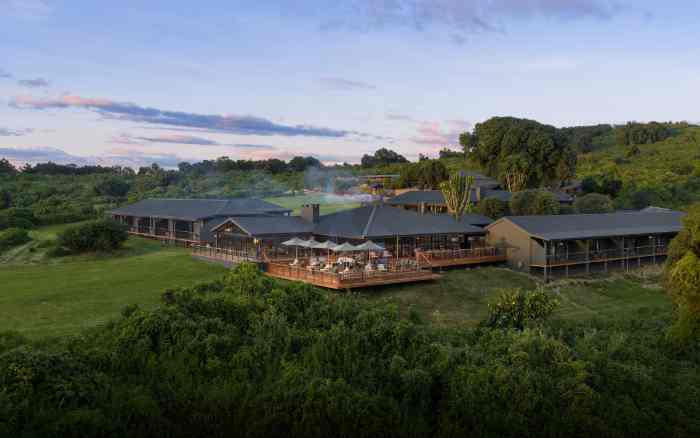
Cooler air, forested highlands, and a crater that lives up to it
From here, the road begins climbing towards the Ngorongoro Highlands and Tanzania changes almost without you noticing. The open plains around Arusha gradually give way to coffee plantations, fertile farmland and thick forest. Maasai villages appear beside the road, the temperature drops and eventually you find yourself high above the plains in one of the most distinctive landscapes in East Africa.
LABA Ngorongoro sits on the edge of the conservation area, perfectly placed for exploring the crater, but this is another stop I wouldn’t rush. A lot of itineraries allow one night here. I’d stay two. Yes, the Ngorongoro Crater is the headline act. Dropping down into a vast volcanic caldera filled with an extraordinary concentration of wildlife is one of those safari experiences that genuinely lives up to its reputation, but the highlands surrounding it deserve some attention too.
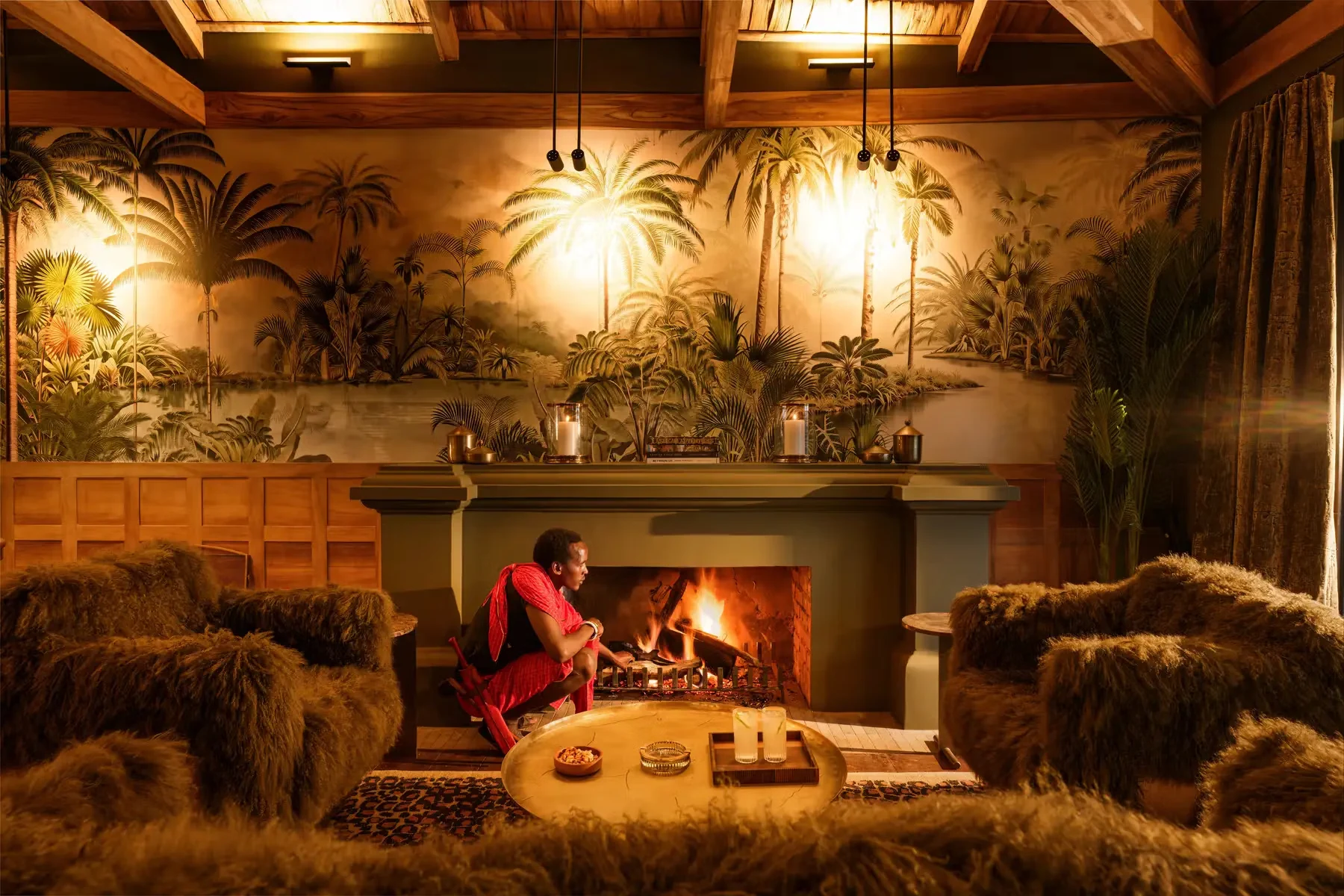
Early mornings can be cool and misty, forest wraps around the crater rim and Maasai herders move cattle across the hills. After the warmth and openness of the plains, it feels almost like you have travelled into a completely different country. And then there is the simple pleasure of returning to the lodge after a day inside the crater, slightly dusty and very ready for dinner, while a fire crackles and the cooler mountain air settles outside. There are worse ways to spend an evening.
Canvas, campfires and exceptional guiding
The following morning, the road begins dropping out of the highlands. The forest starts thinning, the sky seems to get bigger and the horizon keeps stretching until eventually, almost without ceremony, you arrive in the Serengeti.
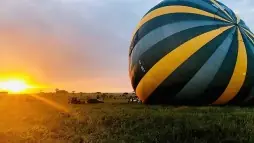
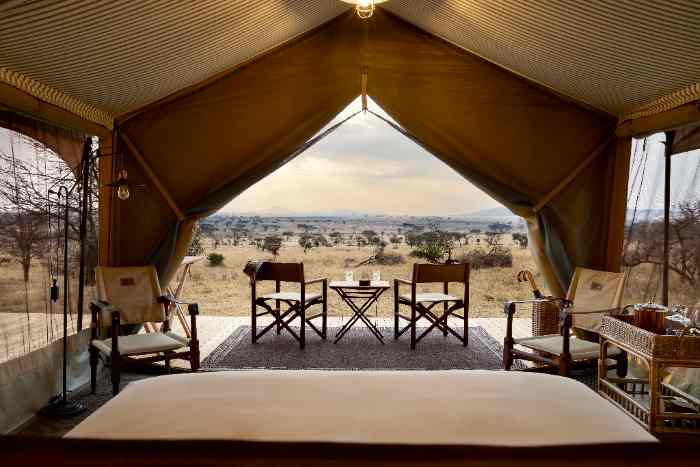
This is where Out of Africa Camp comes in, and if you asked me what I imagined a safari camp would look like before I ever went on safari, it would probably look something like this. The camp follows a north-facing ridgeline overlooking the Serengeti, with canvas tents tucked amongst the trees and vast plains spreading out below. At sunrise, hot-air balloons begin lifting quietly into the sky in front of camp, drifting across the horizon as the first light reaches the grasslands. It is one of those mornings where even people who strongly object to early starts tend to forgive the alarm clock.
There are only 14 tents, but they are spread along roughly 1.6 kilometres of ridgeline, so the camp feels far more private than the numbers suggest. You are not looking straight into someone else’s tent or listening to your neighbours getting ready for their 5.30am game drive. Instead, each tent feels like its own little corner of the Serengeti, with wide views, proper space and that rather addictive feeling that there might not be another person around for miles.
Inside, it is classic East African safari without becoming theatrical about it. Canvas walls, polished timber, leather campaign furniture and softly glowing lamps give the camp the atmosphere of an old safari expedition that has become significantly more comfortable over the years. There are no grand marble entrances or enormous chandeliers competing with the landscape. Frankly, the Serengeti is doing enough.
Days begin early, usually with coffee appearing at exactly the moment you realise you need it, before heading out across the plains in search of whatever the bush decides to offer that morning. And this is where Out of Africa really earns its place on the itinerary. The guiding here is exceptional.
One of the camp’s senior guides was recently named Tanzania’s Best Safari Guide, and the camp has become something of a training ground across the wider LABA portfolio, with guides from other properties regularly coming here to refine their skills. It shows. Good guiding is one of those things that is difficult to appreciate until you experience it. Anyone can point towards a lion. A great guide explains why she is there, what she is watching, where she might move next and why a seemingly empty patch of grassland is suddenly worth sitting quietly beside for twenty minutes.
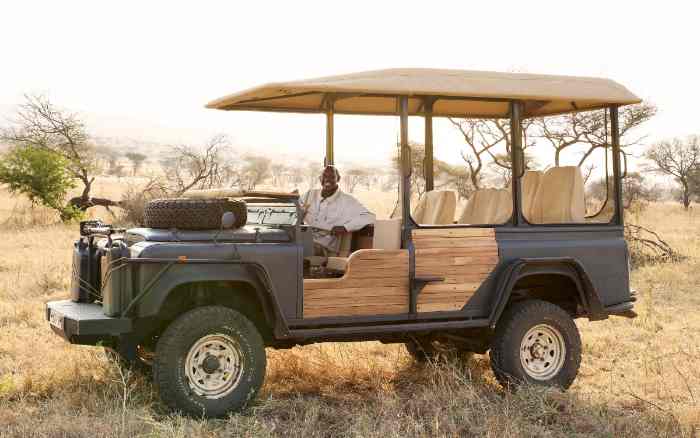
They turn a game drive into a story, and ultimately, that is what stays with you.
Of course, it helps that you are exploring the central Serengeti, where wildlife is abundant throughout the year and the Great Migration moves through the wider region at different times. But some of my favourite safari moments rarely involve the biggest sightings anyway. It is the giraffe unexpectedly stepping onto the road in front of you, the hyena calling somewhere beyond camp after dark, or the moment everyone around the fire simultaneously stops talking because a lion has started roaring in the distance.
Safari has a habit of making an ordinary Tuesday evening feel considerably more interesting.
Back at camp, life slows down very quickly. Someone pours a drink, the fire is lit and everyone starts comparing sightings from the day, usually with increasingly animated hand gestures. Dinner stretches into the evening while the Serengeti gets progressively louder outside. It is uncomplicated and completely absorbing.
Then, just when you have become very comfortable with the idea that safari should involve canvas tents, leather chairs and campfires, the itinerary changes character again.
Contemporary African art, and a great deal more space
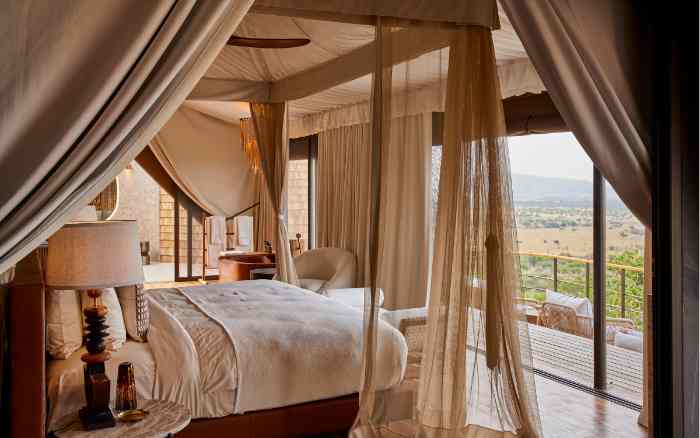
The final stop is Grumeti Art Lodge in the western Serengeti, and it feels completely different. Where Out of Africa leans into the romance of traditional East African safari, Grumeti brings contemporary African art and design into the landscape. Colour, sculpture and artwork fill the lodge, while floor-to-ceiling windows pull the plains into almost every room. You can spend ten minutes looking at a piece of art, turn around, notice an elephant somewhere beyond the glass and immediately forget what you were doing. Which seems to happen quite regularly in the Serengeti.
The western corridor also feels noticeably quieter than the central plains. There are fewer vehicles, fewer camps and a wonderful sense of space, while resident lion, elephant, giraffe and leopard mean the wildlife certainly does not disappear simply because the crowds do. Depending on the time of year, the Great Migration also passes through this part of the ecosystem, with enormous herds moving across the western Serengeti.
Between game drives, the lodge gives you somewhere you might actually want to spend a few hours doing very little. There is an infinity pool overlooking the plains, long lunches that have a habit of becoming even longer, and enough artwork throughout the property that wandering back to your room can occasionally take considerably more time than expected. It is sophisticated, but it never forgets where it is.
Each stop changes the rhythm
And that is really what I like about this entire itinerary. It isn’t four beautiful lodges strung together because they happen to look good in a brochure. Each stop changes the rhythm.
Mama Simba lets you arrive slowly and meet Tanzania on foot. Ngorongoro brings cooler air, forested highlands and one of Africa’s great wildlife landscapes. Out of Africa gives you the safari most people picture before they have ever been to Africa: canvas, campfires, brilliant guiding and the sound of the Serengeti outside your tent. Then Grumeti finishes things with something completely different again, replacing traditional safari nostalgia with bold African art, contemporary design and the quieter landscapes of the western Serengeti.
Nothing feels repeated, and nothing feels like it has been added simply to tick another park off the list. You come home having experienced several very different versions of Tanzania rather than simply having seen a lot of animals.
If someone I cared about asked me where they should go for their first East African safari, this is exactly the sort of journey I’d want them to take.
Although fair warning: after a couple of weeks of someone appearing with coffee before sunrise, spotting leopards you would never have noticed yourself and handing you a drink beside a campfire every evening, returning to normal life can feel slightly underwhelming.
One morning above the plains
Out of Africa Camp looks straight out at the balloons lifting off at sunrise, which makes it the natural place to add a hot air balloon flight over the Serengeti, an hour in the air, then breakfast laid out on the plains. Read about ballooning over the Serengeti →