There is an ease to the country that people tend to remember. The conversations, the villages you pass through, the way tourism still feels woven into everyday life rather than built around it. Add in proper safari, some of southern Africa’s most interesting conservation stories, highland plateaus, working tea estates, mountains and a freshwater lake so enormous your brain keeps insisting there should be tides, and you start to wonder how Malawi has managed to stay this quiet for this long.
And yet, when people start planning Africa, it is rarely the first name that comes up. Which, selfishly, is part of the appeal.
This is not a destination built around one marquee sight. The fun is in how often the country changes on you. You can start among elephants and riverine forest, move through tea-covered hills, spend time in cool highlands and then finish beside clear blue water that feels suspiciously like the coast. It is also noticeably more cost-effective than many of Africa’s better-known safari destinations, so you can stay very well, have excellent guiding and strong wildlife experiences without watching your budget disappear quite as quickly. That does not make Malawi the cheap option. It makes it very good value, which is a rather different thing.
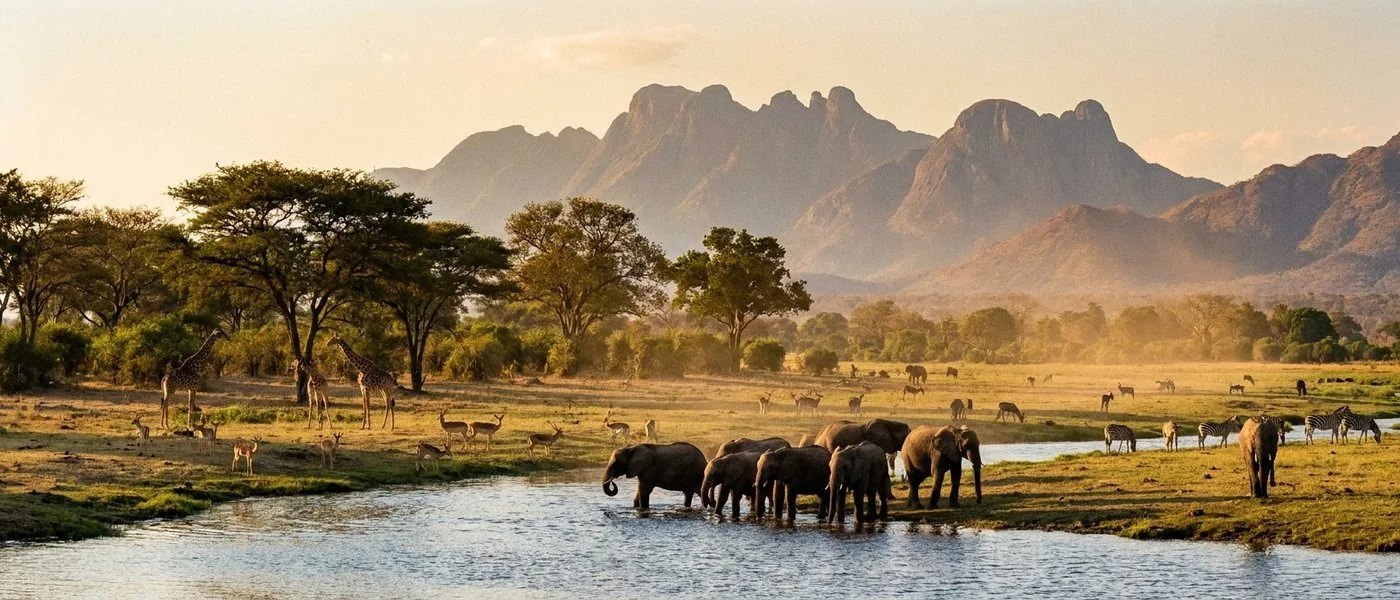
Safari is probably where Malawi surprises people most, and the story here is much bigger than simply how many animals you might see on a game drive.
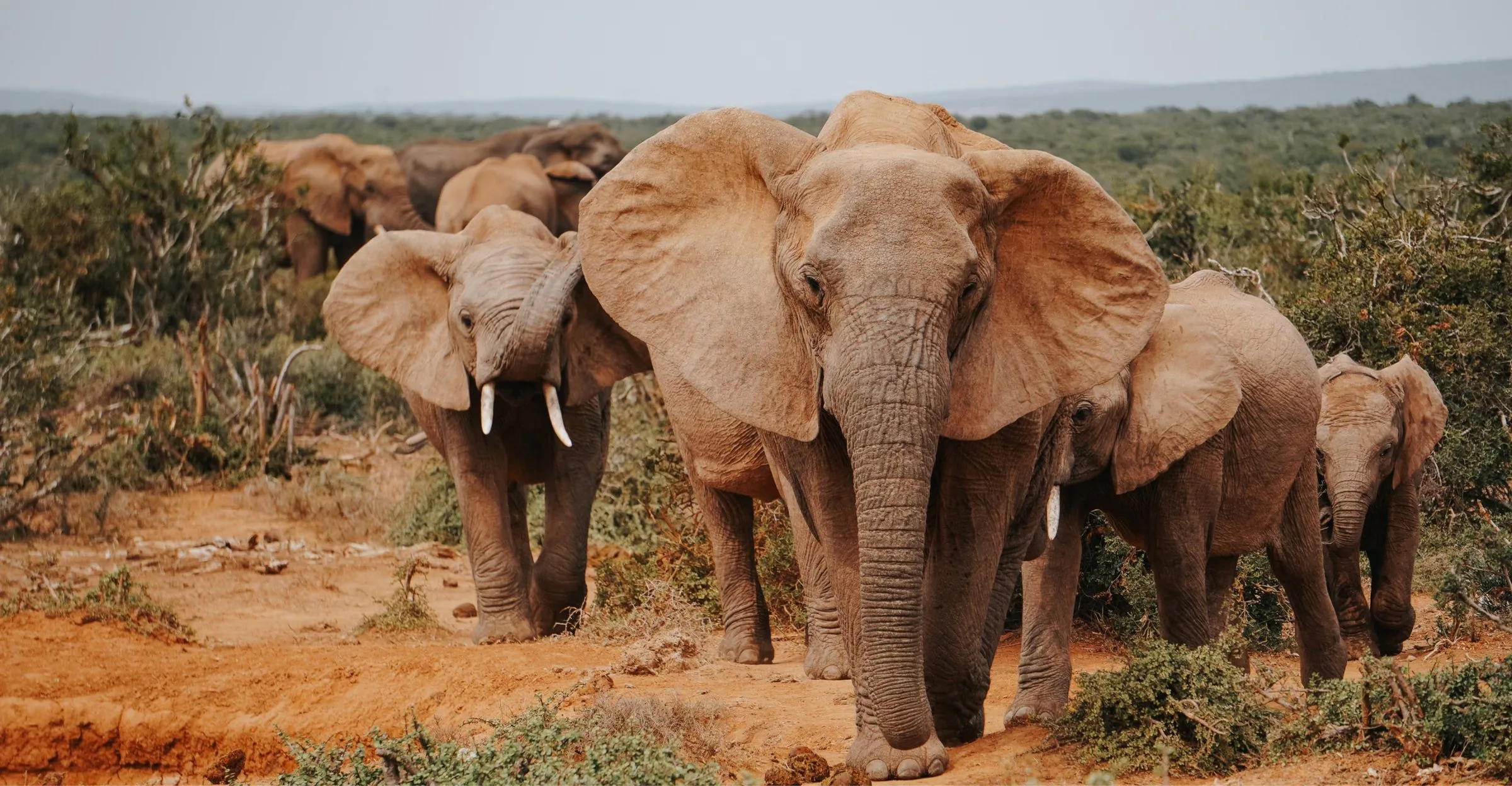
Liwonde National Park sits along the Shire River in southern Malawi, and the river changes the whole character of the safari. Rather than endless dusty plains, you have floodplains, lagoons, woodland and riverbank, so some of the best game viewing happens from the water. You can drift past hippos and crocodiles, watch fish eagles working the river and see elephants moving along the banks while you sit at water level rather than looking down from a Land Cruiser. It is greener, quieter and more intimate than the classic safari people tend to picture.
Until an elephant appears beside the boat, at which point the relaxed mood may leave the building briefly.
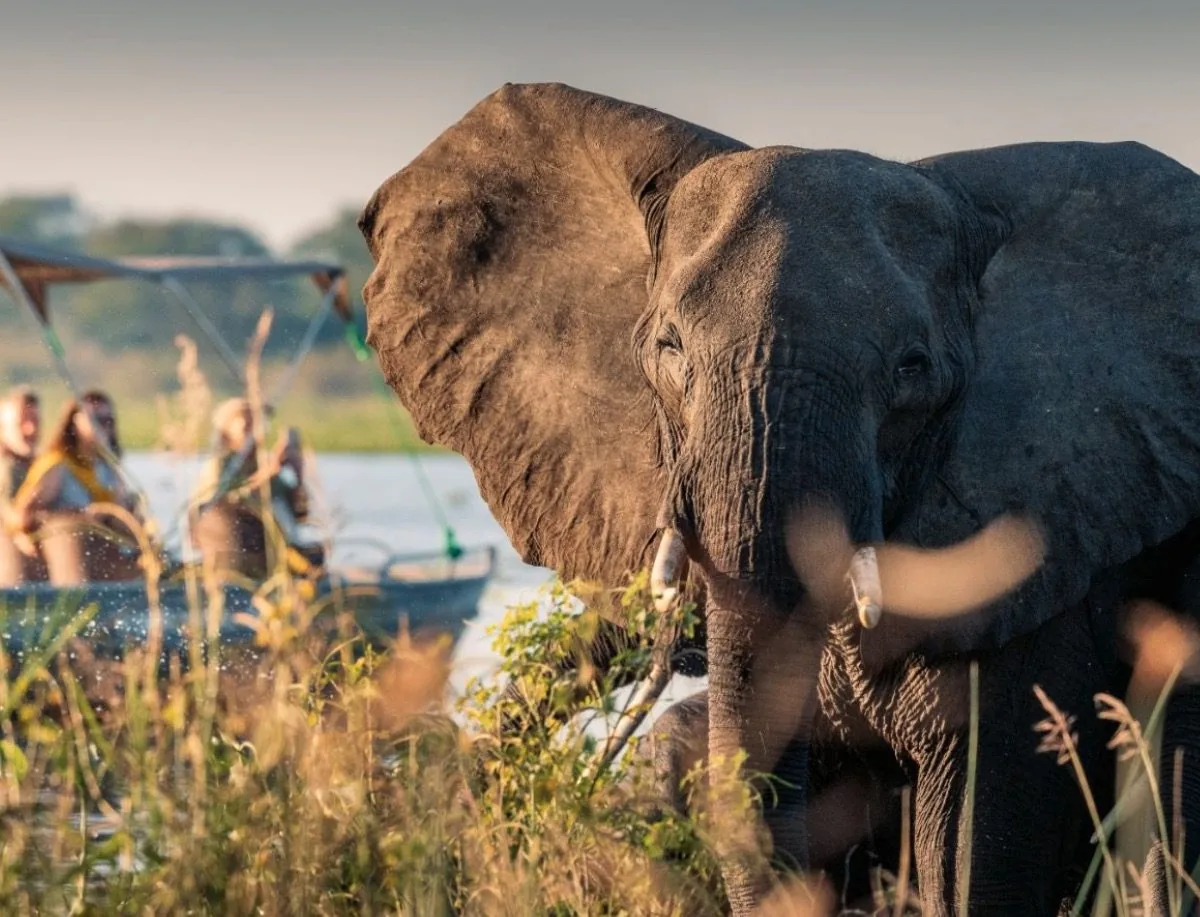
What makes Liwonde particularly interesting, though, is what has happened behind the scenes. When African Parks began managing the park with Malawi’s Department of National Parks and Wildlife in 2015, it became part of a much wider effort to rebuild an ecosystem that had lost some of its key species. Cheetah, lion, black rhino and wild dog have since been reintroduced, wildlife numbers have recovered dramatically and the park has become an important source population for conservation work elsewhere in Malawi.
That is what makes safari here feel particularly worthwhile. You are not only looking at wildlife; you are seeing the result of years of conservation work actually functioning.
Further south, Majete Wildlife Reserve tells an even more dramatic story. By the late 1990s, poaching had stripped the reserve of much of its large wildlife. African Parks took over management in 2003 and began the painstaking job of rebuilding it, ultimately reintroducing more than 3,000 animals from 17 species, including black rhino, elephant, lion, giraffe, cheetah and wild dog. Today, Majete is once again a functioning Big Five reserve.
It is a remarkable turnaround, but what we like most is that it does not feel like a conservation project you are politely visiting because it is good for you. It feels like safari. There are predators, elephants, rhino and plenty of smaller wildlife, but without the procession of vehicles you can encounter in some of Africa’s better-known parks.
That is really the difference with Malawi.
Will the wildlife density always match the Serengeti or the Maasai Mara? No. But you are also far less likely to find yourself seventh in line for a leopard, trying to peer through somebody else’s roof hatch.
For us, that counts for a lot.
Then there is Nkhotakota Wildlife Reserve, which takes the conservation story in a different direction again. This is a vast, rugged reserve of hills, river valleys and dense miombo woodland stretching down from the Great Rift escarpment towards Lake Malawi. It is wilder, less immediately rewarding and not somewhere you come expecting to tick off species every ten minutes. What you are seeing here is a wilderness being rebuilt.
Nkhotakota became the focus of one of the largest elephant translocations ever attempted in Africa, with roughly 500 elephants moved into the reserve as part of a huge restoration effort. Thousands of other animals were also translocated, anti-poaching efforts were strengthened and wildlife populations have continued to recover. It is the sort of place where the story of what is happening to the landscape becomes just as interesting as the animals themselves.
Head further north and Malawi changes the safari rules yet again. Nyika National Park sits high on a plateau and looks almost nothing like the Africa most people expect. Think rolling grasslands, mist, wildflowers and pockets of forest, with zebra grazing across the hills, roan and eland moving through the open country and leopard around the forest edges.
It is Malawi doing a surprisingly convincing impression of the Scottish Highlands.
Walking and cycling are a big part of the experience here, which gives Nyika a completely different rhythm from the lowland parks. You are not simply being driven from sighting to sighting. You are properly out in the landscape, and the scale of the plateau does most of the work.
That variety is what makes Malawi’s safari circuit so interesting. Liwonde is river and wildlife. Majete is predators and one of Africa’s great conservation recoveries. Nkhotakota is wilderness restoration on an enormous scale. Nyika is highland scenery, walking and space. It never feels as though you are doing the same safari four times in slightly different scenery.
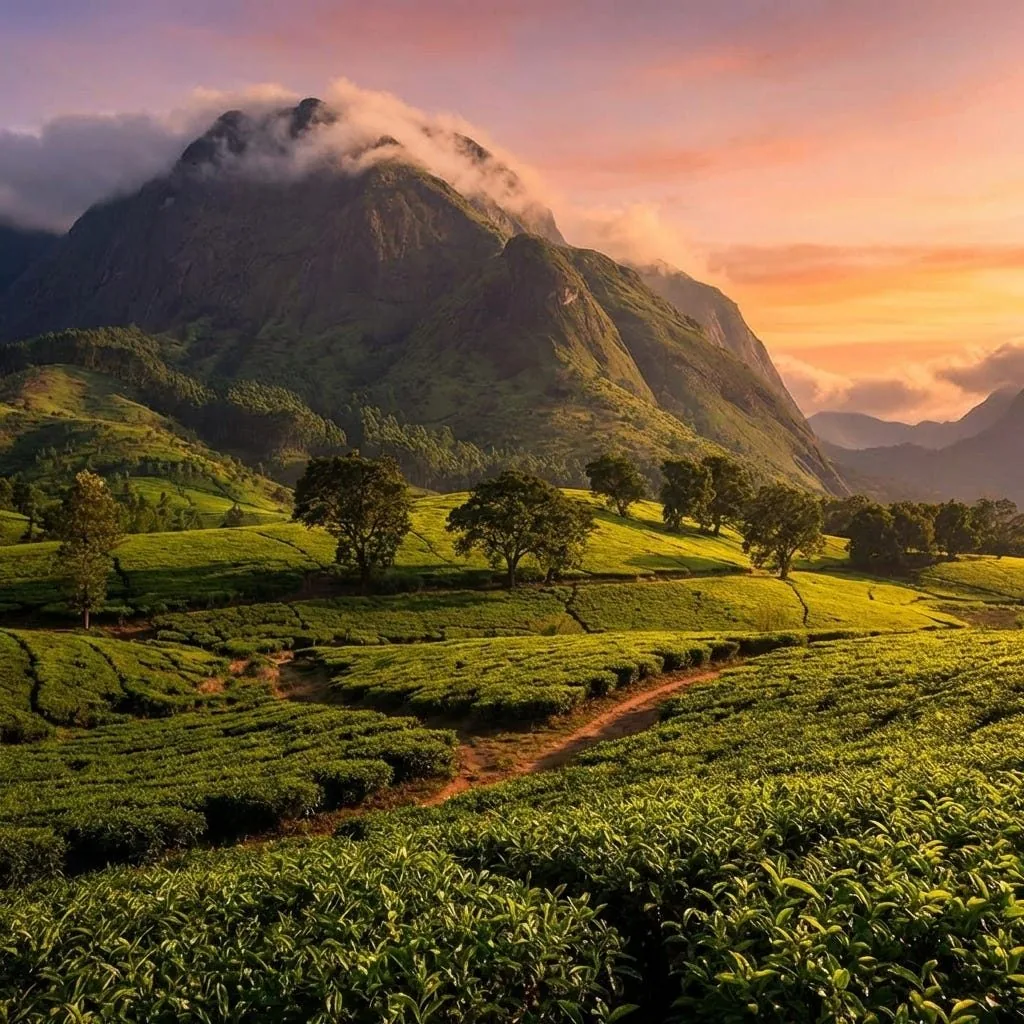
Then, just as you become accustomed to game drives, early starts and discussing animal tracks over breakfast, Malawi changes completely. South of Blantyre, around Thyolo, the country turns green in an entirely different way. Tea has been grown here since 1908, and the landscape becomes an almost absurd patchwork of immaculate tea fields rolling across the hills beneath Mount Mulanje. Malawi was the first country in Africa to grow tea commercially, and it remains one of the country’s major exports.
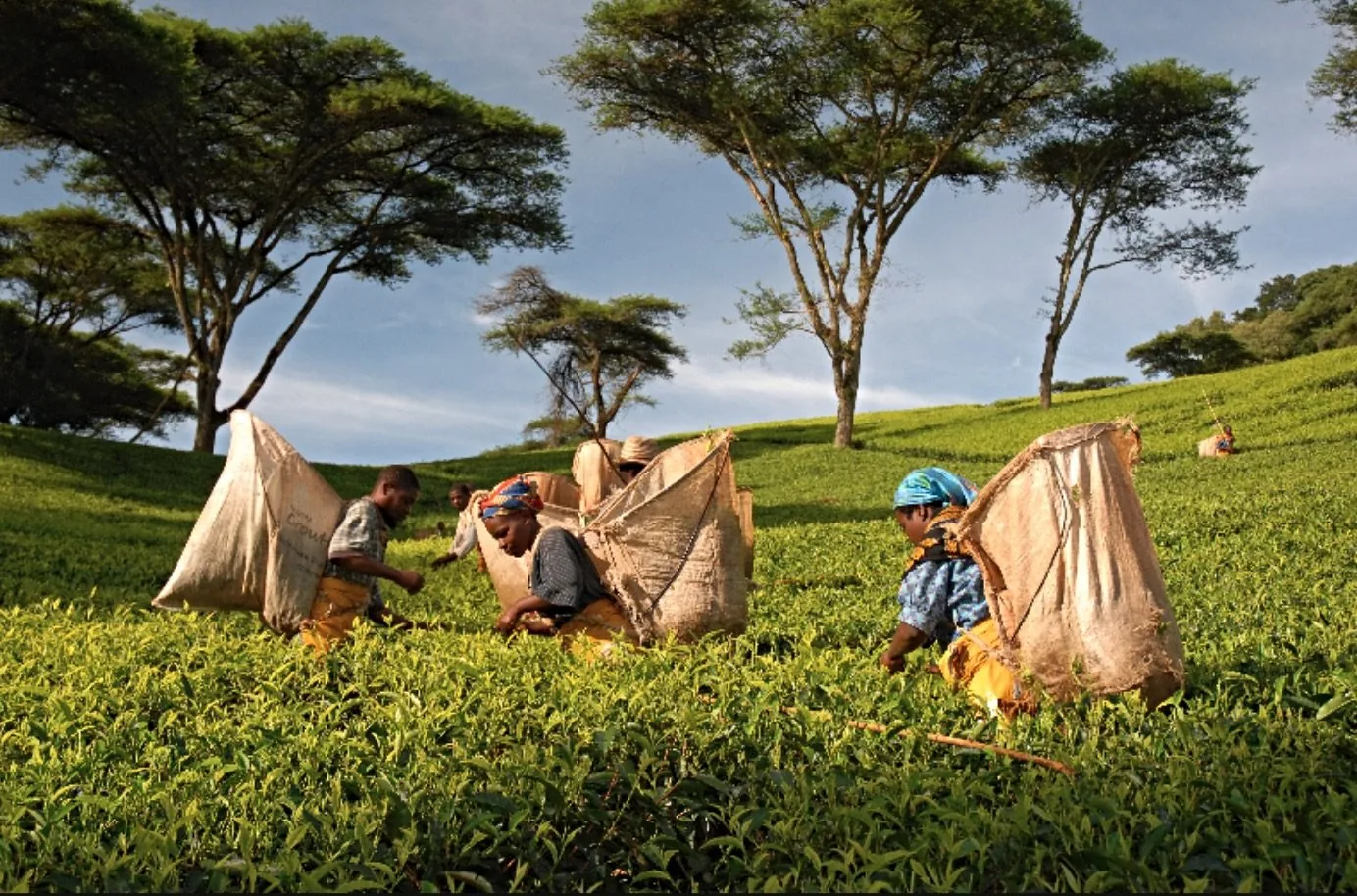
The tea estates are far more interesting than a token stop for afternoon tea. These are working plantations, and spending time here gives you a completely different view of Malawi. You can walk or cycle between the tea bushes, visit the factory and see the process from freshly picked leaf through to the finished product, then taste everything from black and green teas to white and oolong varieties.
At Satemwa, tea has been produced for generations, and some of its small-batch teas travel considerably further than most visitors realise.
What we particularly like about adding the tea country to a Malawi itinerary is the change in rhythm. After safari, you are suddenly travelling through immaculate green hills with Mount Mulanje rising in the distance. The air is cooler, the landscape becomes softer and life feels more agricultural. A morning walking through tea fields followed by a tasting and a long afternoon looking across the plantations is not the Africa most people picture before they arrive, which is precisely why it belongs in the trip.
Mount Mulanje gives the whole region a fairly dramatic backdrop. The massif rises almost vertically from the surrounding plains, with granite peaks, forest, waterfalls and a network of hiking trails. You can make Mulanje a serious walking destination in its own right, or simply enjoy having this enormous wall of mountain sitting behind the tea estates while somebody pours you another cup.
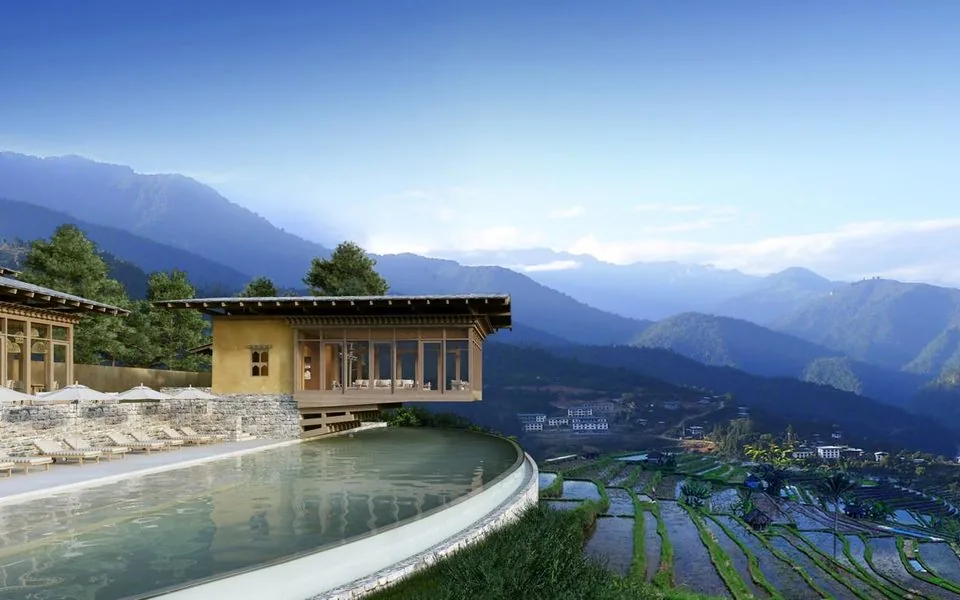
And then there is the lake. Lake Malawi is not just where you go to collapse at the end of safari. It is one of the defining features of the country and a proper destination in its own right. Stretching for hundreds of kilometres, it feels much more like an inland sea than a lake. The water is remarkably clear in places, beaches run along long stretches of shoreline and rocky islands sit offshore surrounded by freshwater that can look almost tropical.
The biodiversity beneath the surface is extraordinary too. Lake Malawi is famous for its cichlids, with hundreds of species, many found nowhere else in the world. Its evolutionary importance has even been compared with the finches of the Galápagos, which is quite a serious scientific claim for somewhere that also happens to be very good for lying on a beach with a drink.
Snorkelling and diving are genuinely worthwhile, particularly around rocky islands and headlands where brightly coloured fish gather just below the surface. At the right time of year, the visibility can be excellent, but you absolutely do not have to turn the lake into another activity schedule.
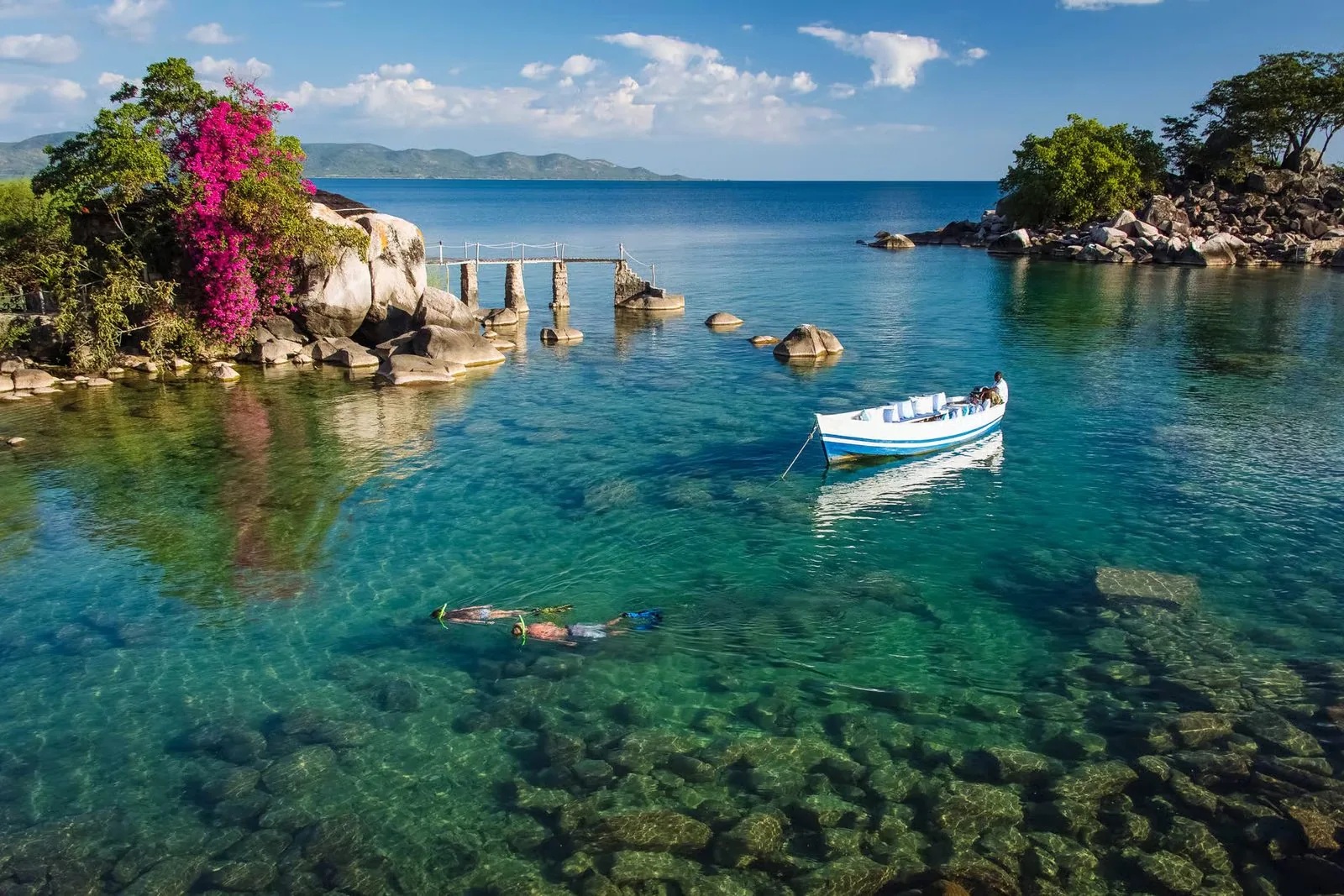
After a week of safari, there is something very nice about waking up later, swimming when you feel like it, having a long lunch and deciding that your main achievement for the afternoon may be getting into the water a second time.
Likoma Island is one of the loveliest places to experience that change of pace. Sitting out in the lake close to Mozambique, it feels properly removed, with villages, sandy beaches and the slightly improbable sight of St Peter’s Cathedral rising from a small island in the middle of Lake Malawi.
The scale of the lake can be strangely disorienting. You are swimming in clear freshwater, looking across what appears to be an ocean horizon, with beaches and fishing boats around you, and it becomes very easy to forget that Malawi does not have a coastline.
That is really Malawi’s trick. It keeps giving you a different version of itself.
You can be in Liwonde watching elephants from a boat, then in Majete seeing what one of Africa’s most successful wildlife restoration projects looks like twenty years later. A few days after that you are walking between tea bushes beneath Mount Mulanje, and eventually you are swimming with brightly coloured fish in a lake that looks suspiciously like the Indian Ocean.
Because the country is relatively compact, those contrasts can sit within one itinerary without turning the whole thing into a logistical endurance test. And because Malawi is generally more cost-effective than many of Africa’s headline safari destinations, you can put together a genuinely varied, high-quality trip without needing quite the same budget.
That is why we do not really see Malawi as an alternative to somewhere more famous. It is not the cheaper version of Zambia, Tanzania or Botswana. It gives you something different.
The safari is much stronger than people expect, and the conservation story gives it real substance. The tea country completely changes the rhythm of the journey, the highlands add another landscape altogether, and Lake Malawi is far too good to be treated as a convenient place to flop at the end.
It still feels like somewhere you discover as you go, rather than somewhere you arrive already knowing exactly what the trip is supposed to look like.
Which is why calling Malawi Africa’s best-kept secret feels slightly dangerous.
Secrets do have a habit of getting out.
We know how the pieces fit
Which parks to pair, how long to give the tea country, and where on Lake Malawi to finish, all without turning the trip into a logistical endurance test.
Questions we’re often asked
Is Malawi good for safari?
Yes. Liwonde, Majete, Nkhotakota and Nyika each offer a different style of safari, and Majete is once again a functioning Big Five reserve after major reintroductions led by African Parks.
Is Malawi cheaper than other safari destinations?
Malawi is generally more cost-effective than Africa’s headline safari destinations, so you can stay very well with excellent guiding for less. Very good value rather than the cheap option.
Can you swim in Lake Malawi?
Yes. Snorkelling and diving around the rocky islands and headlands are worthwhile, and the lake is famous for its hundreds of cichlid species.