The roads twist through mountain passes, valleys change completely from one region to the next, monasteries appear on cliffs where no sensible building should be, and quite a lot of the magic happens somewhere between where you started and where you thought you were going.
Which is exactly why Six Senses Bhutan works so well.
Rather than building one enormous resort and expecting the country to come to you, Six Senses built five small lodges across Thimphu, Punakha, Gangtey, Bumthang and Paro, then designed the journey around moving between them. Together they form what Six Senses calls a Khamsa, or Royal Stroll, through the Kingdom.
You can technically stay at just one. We would not. The clever part is watching Bhutan change around you, and then seeing each lodge change with it.
Most journeys begin in Thimphu, one of the world’s smallest capitals, before climbing almost immediately into the hills above it. Six Senses Thimphu, appropriately known as the Palace in the Sky, sits among apple orchards and young pine forest, with the enormous Buddha Dordenma visible across the valley. It is close enough to dip into Thimphu for markets, galleries, monasteries and a look at contemporary Bhutanese life, but when you return uphill, the city seems to disappear remarkably quickly.
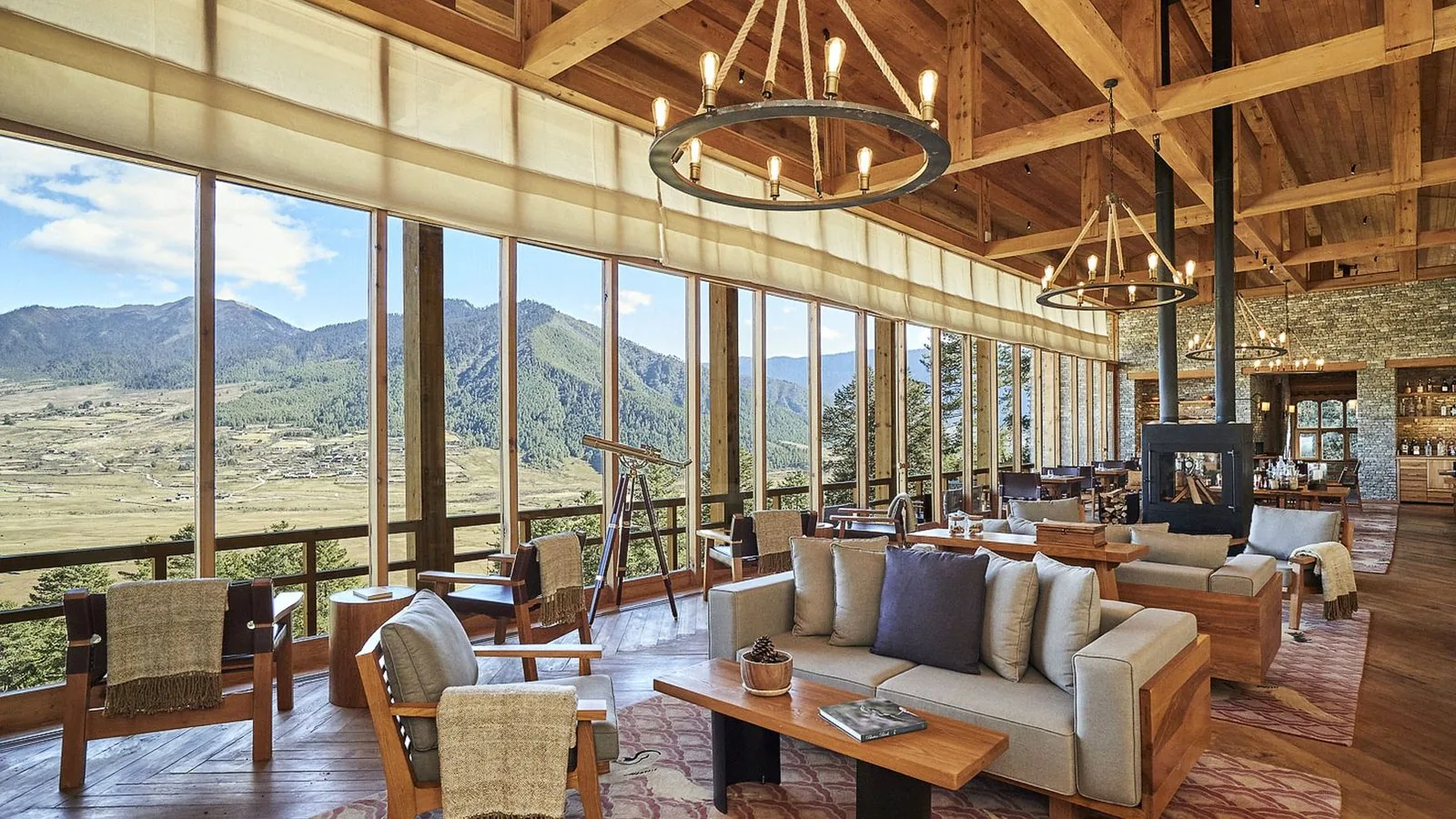
The lodge is calm without being too precious about it. Suites are around 77 square metres, with floor-to-ceiling windows, huge decks, traditional wood-burning bukhari stoves and bathrooms where the bathtub arguably has the best seat in the house. Your first day is deliberately gentle, which makes sense when you have just flown into Paro and climbed straight to more than 2,700 metres. A swim, a jet-lag massage and a quiet afternoon on the terrace are all perfectly respectable plans, although you can also meditate in the Prayer Pavilion, visit Buddha Dordenma, hike to Cheri or Tango Monastery, try archery or have an astrology reading with a monk. It is a nice introduction to the way Six Senses does things here: even when you are taking it slowly, you are still very much in Bhutan.
From Thimphu, the road winds over Dochula Pass, past 108 white chortens and, if the clouds behave themselves, views stretching across the Himalayas. Then Bhutan starts changing. You drop in altitude, the temperature rises, pine forest gives way to terraced rice fields and the landscape becomes greener and softer as you enter Punakha.
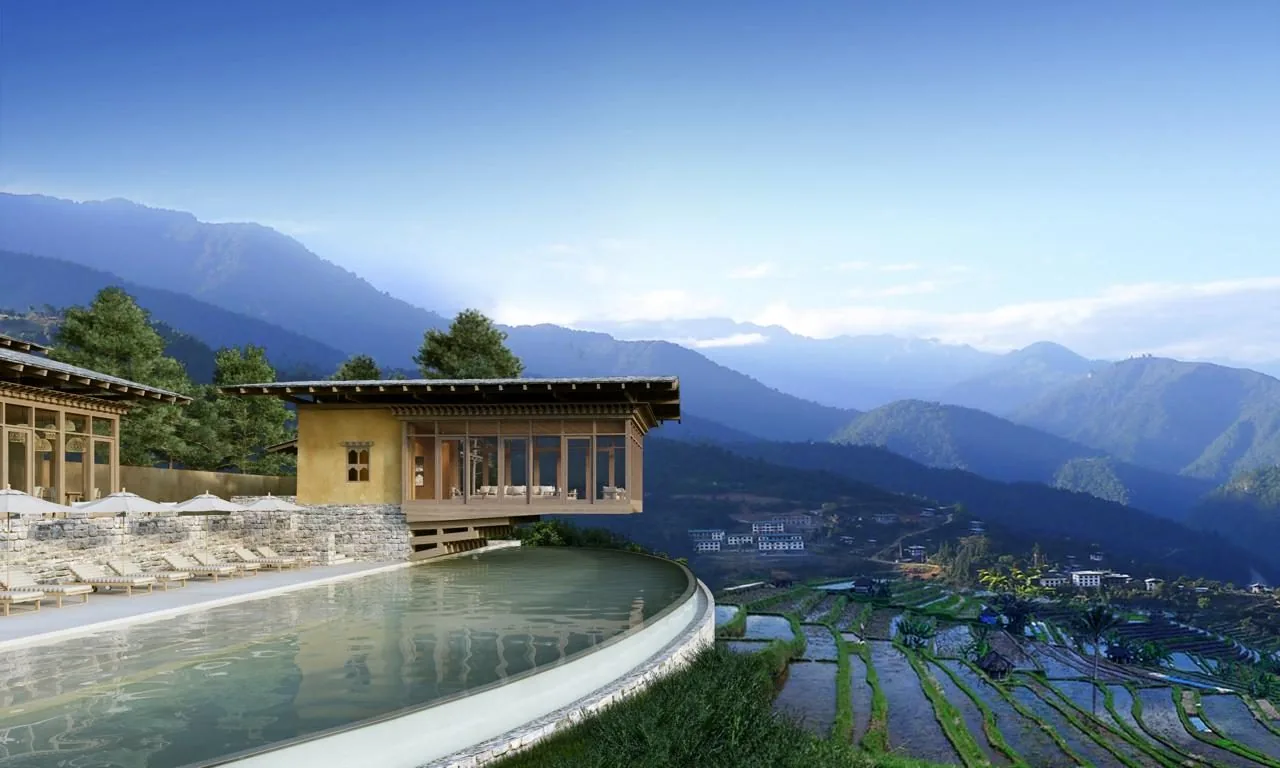
Six Senses Punakha feels completely different because it should. The architecture takes its cues from the traditional farmhouses of the valley, and its centrepiece is the Flying Farmhouse, a cantilevered timber lounge hovering above the swimming pool and rice terraces. It sounds suspiciously like a name dreamt up by a marketing department until you see it there, at which point you rather have to give them this one.
The suites start at around 104 square metres, with enormous decks, wide valley views and deep bathtubs beside timber-framed windows. The lower altitude means life spills outdoors a little more here: there is an outdoor pool, a herbal garden, yoga and meditation spaces and terraces that make doing absolutely nothing seem like a fairly productive afternoon.
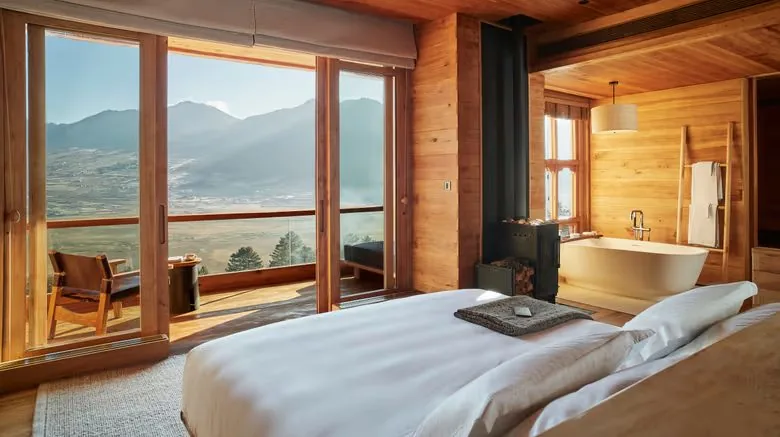
Punakha itself will eventually lure you away. You can cycle towards Punakha Dzong, raft the Mo Chhu, walk through villages and rice fields, then come back to the lodge and watch the valley change colour over a drink.
By the time you leave Punakha, the idea behind Six Senses Bhutan has become pretty clear. You are not moving between five versions of the same luxury hotel with slightly different cushions. The landscape has changed, so the hotel has too.
The road east becomes quieter again as you climb towards the high Phobjikha Valley and Six Senses Gangtey. Known as the Birdwatching Bridge, the lodge looks across a vast sweep of wetlands, forest and mountains, and in winter the valley welcomes rare black-necked cranes migrating down from Tibet.
These cranes are not just a nice bit of wildlife spotting. They are deeply significant in Bhutanese culture, and Phobjikha is one of the most important wintering grounds for them. If you are here during crane season, watching them move across the valley gives the whole place another layer, and suddenly the name Birdwatching Bridge makes a lot more sense.
Almost everything here seems to have been designed around one very simple instruction: sit down and look outside.
Gangtey is probably the most contemplative of the five lodges. Dark timber, stone and low horizontal architecture keep it quiet against the landscape, while the suites use huge windows and private balconies to keep the valley constantly in view. A bukhari stove takes care of the colder evenings, and there is a lovely cocooned feeling inside when mist starts drifting across the valley outside.
The days here are deliberately slower. You might walk the Gangtey Nature Trail, visit the 17th-century Gangtey Goenpa, wander through nearby villages or head into the wetlands with a guide to learn more about the cranes, birdlife and the ecosystem that supports them. Or you might have a spa treatment, order a coffee and spend an unreasonable amount of time watching the weather move across the valley.
On paper, that sounds like you have achieved very little. In Gangtey, that rather feels like the point.
The weather becomes part of the experience too. Morning mist lifts, light moves across the valley, the mountains disappear and reappear, and by late afternoon the landscape can look completely different from the one you woke up to. Even outside crane season, the valley is worth the journey for its birdlife, walking and sheer sense of openness.
It is probably the quietest of the five lodges, and that is exactly why it works. By the time you leave Gangtey, you may have discovered that doing very little can be surprisingly memorable.
If time allows, continue further east and Bhutan becomes more rural again. Roads follow rivers through farmland and small villages towards Bumthang, considered the spiritual and cultural heartland of the country. Six Senses Bumthang is tucked among pine trees and calls itself a Forest Within a Forest, which is refreshingly accurate as hotel nicknames go.
This is a smaller, more intimate lodge, where timber, large windows and the surrounding trees make the rooms feel almost wrapped in forest. The suites are more cocooning than grand, with private balconies, deep baths and wood-burning stoves that become increasingly persuasive once the evening temperature drops.
Bumthang is less about ticking off famous sights and much more about getting under the skin of the place. This part of Bhutan is dense with temples, monasteries and sacred sites, including Jambay Lhakhang and Kurje Lhakhang, and days unfold through pilgrimage walks, village visits and trails across farmland and forest. There is less “you absolutely must see this before lunch” energy here, and more time to walk, listen and understand why this valley has such significance to Bhutanese spiritual life.
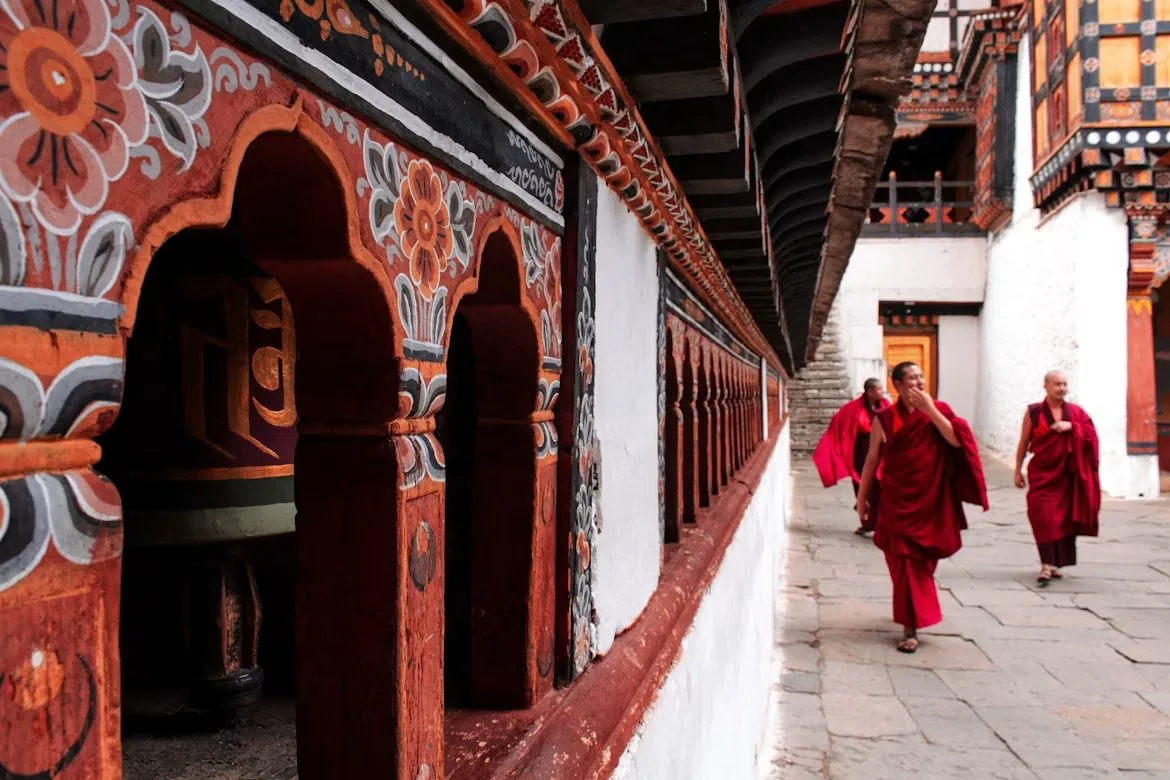
Back at the lodge there is yoga, meditation, the spa and enough forest outside the window to make your phone feel increasingly unnecessary.
Eventually the journey turns back west towards Paro, and by now Bhutan has had plenty of time to get under your skin. Six Senses Paro sits high above the valley beside the remains of a 15th-century fortress, earning it the name Stone Ruins. The architecture is slightly more rugged here, with old stone walls, timber, fireplaces and huge windows, but what makes it memorable is how the ruins have been allowed to remain part of the hotel rather than turned into something you admire politely from behind a rope.
You can walk through them, dine among them or sit nearby in the evening as the light disappears across the valley. The suites are spacious and understated, but Paro is less about what is inside the room and more about what is waiting outside it.
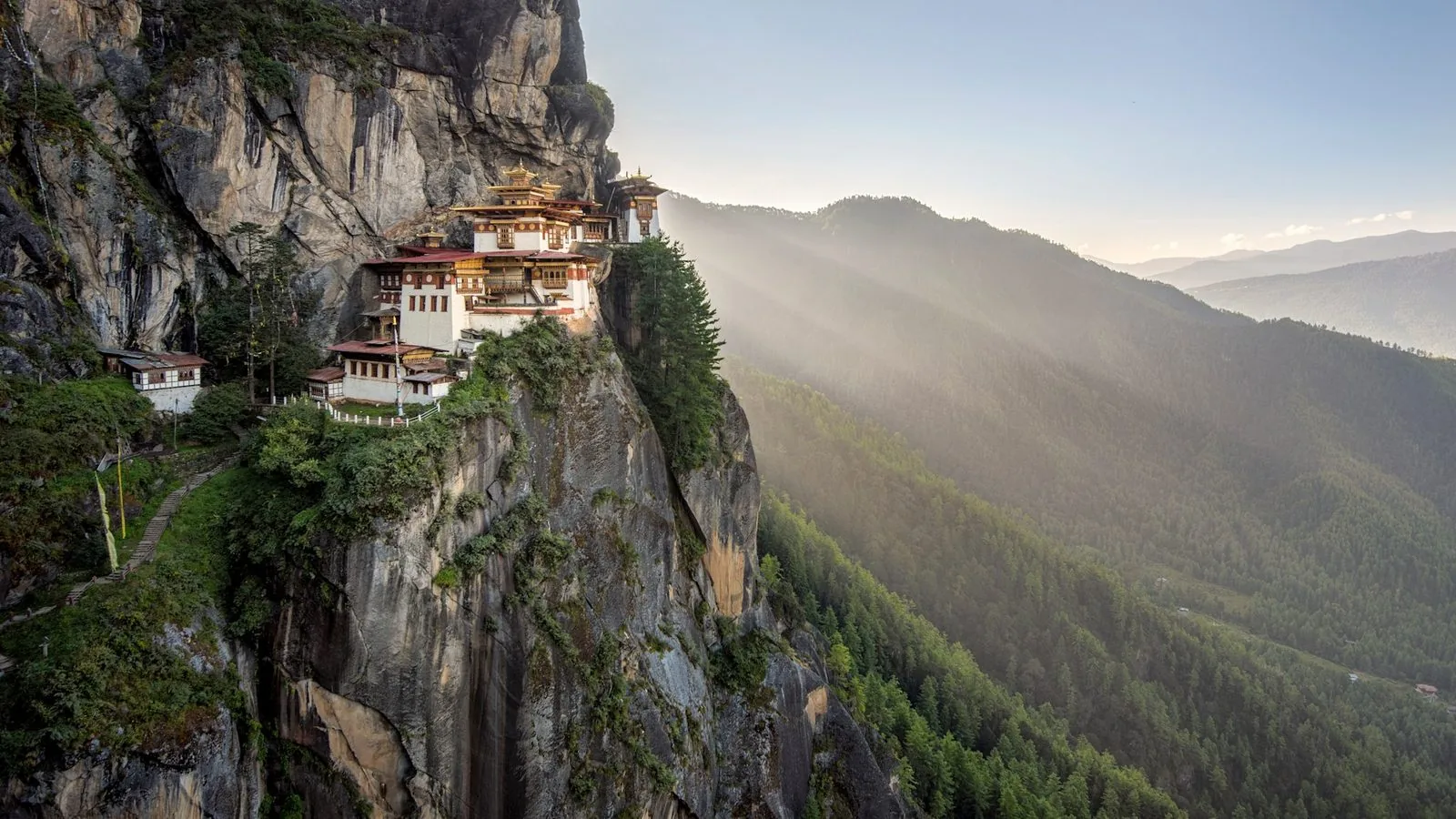
Most notably, this is where you tackle Tiger’s Nest.
Taktsang Monastery clings to a cliff face high above the valley, reached on a several-hour hike through forest and prayer flags with increasingly dramatic views as you climb. Technically, you do not have to do it, but you have come all this way.
Paro is also a lovely place to slow down again afterwards, with monastery visits, butter-lamp lighting, village walks, meditation, local markets and, quite sensibly after Tiger’s Nest, time in the spa. As a final stop it brings together much of what you have been seeing along the way: Bhutan’s history and spirituality, its mountains and valleys, old architecture, everyday rituals and the fact that walking uphill seems to feature rather regularly.
Six Senses offers suggested journeys from four to fifteen nights, but there is plenty of flexibility around how active you want to be, what interests you and how slowly you want to move. On the longer Khamsa journeys, your private guide, driver and vehicle stay with you, which is important. It means the experience feels like one continuous journey through Bhutan rather than five hotel bookings connected by transfers.
And that is ultimately why we would send you. Six Senses does the luxury part very well, of course. There are beautiful suites, excellent food, spas, heated pools, yoga and meditation, but Bhutan would be wasted if those became the main event.
The moments that stay with you might be Tiger’s Nest or a sweeping Himalayan view, but they might just as easily be watching black-necked cranes cross Phobjikha Valley, a conversation with a monk, a long drive through the mountains or an afternoon where not very much happened at all.
By the time you reach Paro, it does not feel as though you have spent two weeks hopping between luxury hotels. You have watched Bhutan change from valley to valley, and each lodge has quietly changed with it.
Six Senses has simply made sure you have somewhere very good to come home to at the end of each day.
We’ll set the pace for you
How many of the five lodges to include, how many nights in each, and whether to time it for crane season in Phobjikha or the clearer skies over the Himalayas.
Questions we’re often asked
How many Six Senses lodges are there in Bhutan?
Five: Thimphu, Punakha, Gangtey, Bumthang and Paro. Together they form a journey Six Senses calls the Khamsa, or Royal Stroll.
How long should a Six Senses Bhutan journey be?
Six Senses suggests journeys from four to fifteen nights. On the longer Khamsa journeys your private guide, driver and vehicle stay with you throughout.
When can you see black-necked cranes in Bhutan?
The cranes winter in the Phobjikha Valley near Six Senses Gangtey, migrating down from Tibet each winter.