Reaching 90 degrees North isn't like sailing to Antarctica or cruising through Alaska. There are no ports. No villages. No landmarks waiting on the horizon. Just thousands of kilometres of shifting sea ice, unpredictable weather and one of the most remote environments on Earth.
And it takes a very different kind of ship to get there.
Built to push straight through the ice
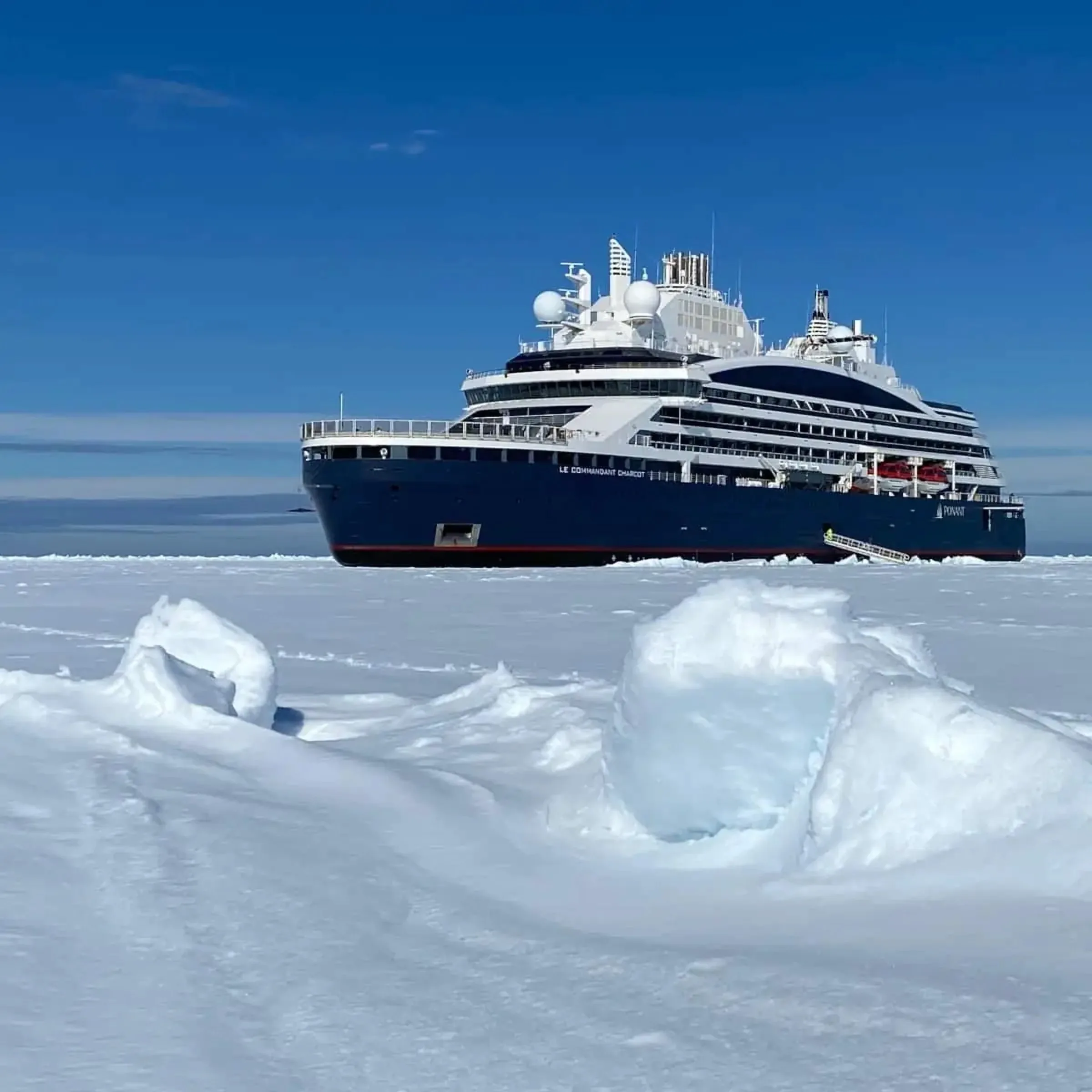
Purpose-built to travel where almost no other passenger ship can, Le Commandant Charcot isn't simply a luxury expedition ship. She was designed from the keel up to tackle some of the harshest conditions on Earth, and today she's the world's only luxury Polar Class 2 expedition ship capable of reaching the Geographic North Pole under her own power.
Instead of weaving between gaps in the sea ice like most expedition ships, Charcot is built to push straight through it. As the ice becomes thicker and more continuous, the ship simply slows its pace. You can feel the gentle vibration through the deck as the reinforced hull breaks its way north, leaving a narrow ribbon of open water behind. One of the most memorable sounds isn't silence. It's the low, steady crack of the hull as tonnes of Arctic sea ice slowly give way beneath the ship.
There's no monument. No signpost. Just a patch of sea ice at the very top of the planet, where every direction leads south.
90°00′00″ North
Every bit a luxury expedition ship
For all that capability, Charcot is every bit a luxury expedition ship. Carrying just over 240 guests, every suite and stateroom has a private balcony, while dining is overseen by French chef Alain Ducasse. On board you'll also find a spa, indoor and outdoor pools, and spacious observation lounges designed to make the most of the ever-changing scenery. Even when you're inside, the Arctic never really leaves you: floor-to-ceiling windows ensure the view is almost always front and centre.
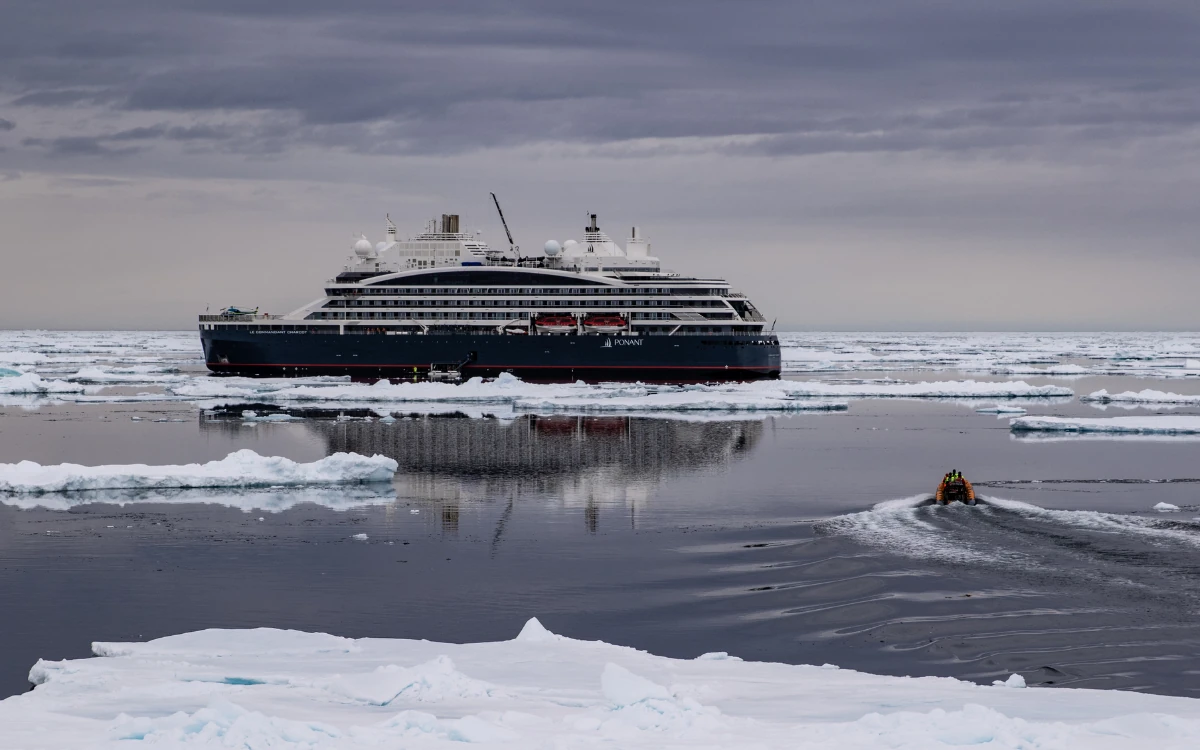
Days quickly fall into an easy rhythm. Breakfast is usually accompanied by a briefing from the expedition team of naturalists, glaciologists and polar experts before everyone heads out onto the decks to see what the Arctic has in store. Some days that means Zodiac cruises through newly opened leads in the pack ice. Others, it's simply standing outside with a hot coffee, watching the ship steadily push north.
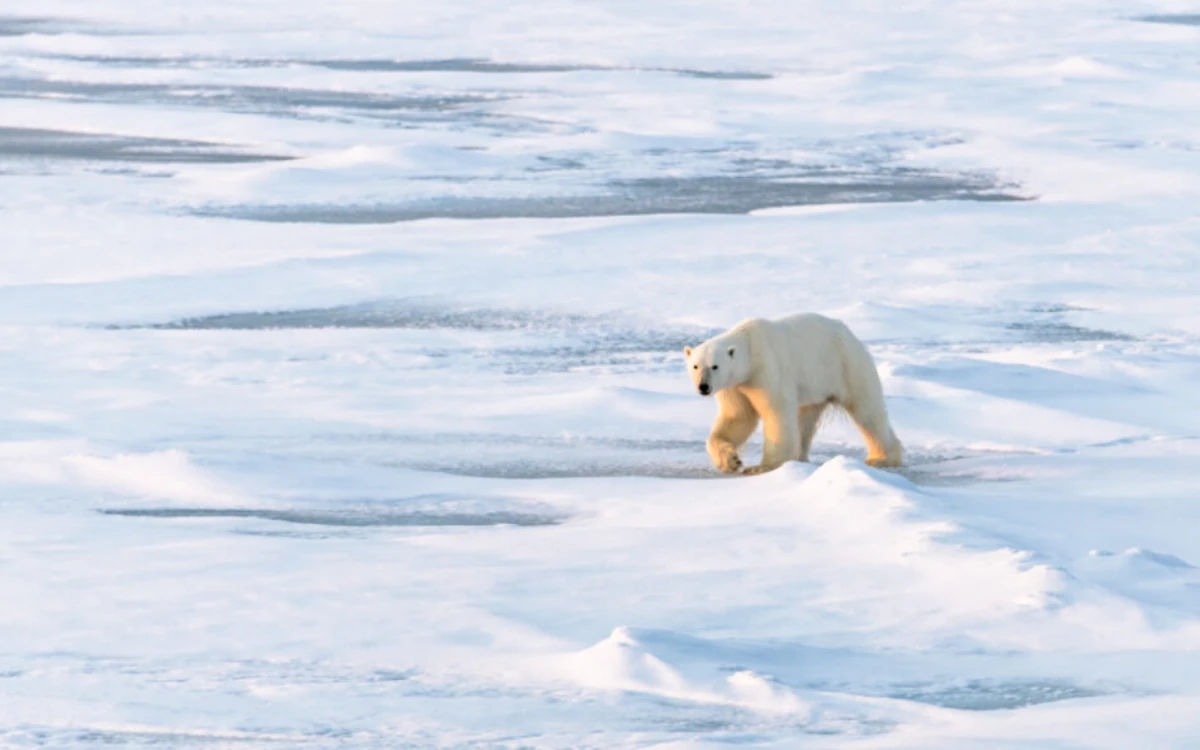
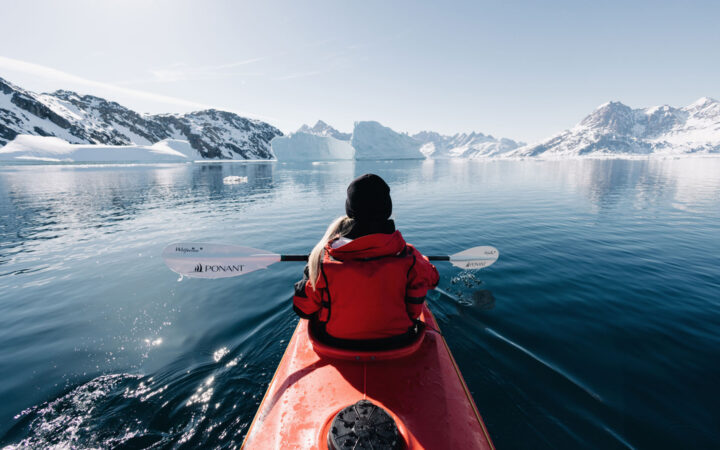
The further north you travel, the emptier the world becomes. Mountains are left behind, open water gradually gives way to an endless expanse of sea ice, and before long the horizon becomes almost impossible to distinguish from the sky. On some days whales surface unexpectedly beside the ship, or walrus are spotted hauled out on drifting ice floes.
In summer, the sun never really sets, casting a soft golden light across the ice well into the evening before climbing again a few hours later. One day the landscape is brilliantly white beneath clear blue skies; the next it's wrapped in fog, with towering pressure ridges and vivid blue melt pools emerging from the mist.
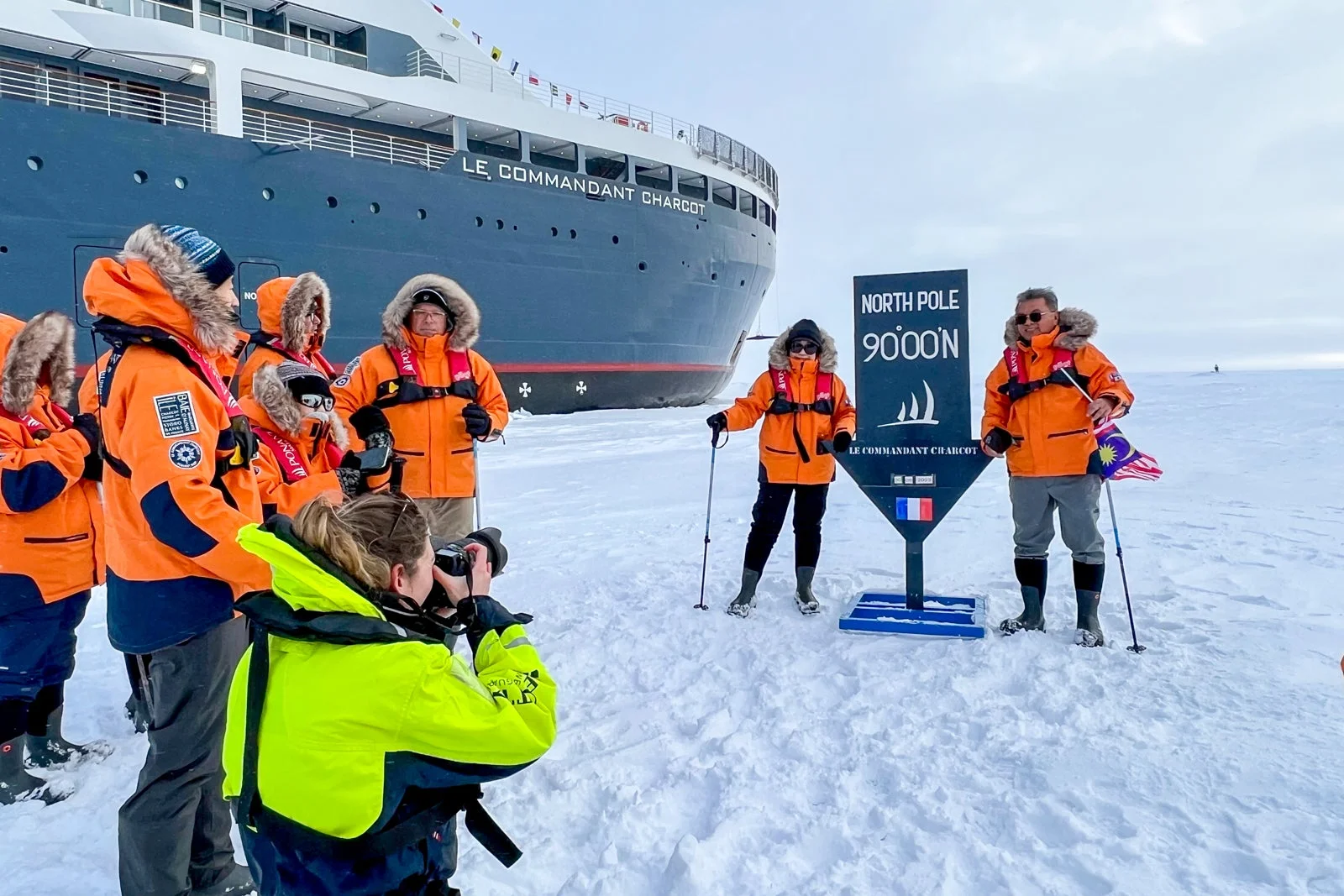
The North Pole isn't a fixed point on the landscape. It's the place where every line of longitude meets. And then, after days of pushing north, you arrive. 90 degrees, zero minutes, zero seconds.
The captain's announcement is met with plenty of excitement, but before anyone heads outside the expedition team carefully prepares a safe landing area on the ice. The ship's GPS confirms you've arrived at exactly 90 degrees North, and before long guests are stepping onto the frozen Arctic Ocean itself.
One afternoon at the top of the world
There's no monument. No signpost. Just a patch of sea ice at the very top of the planet. For a brief moment, you're standing at the only place on Earth where every direction leads south. Cameras come out, champagne is poured and, for those wanting the ultimate bragging rights, there's the chance to take a polar plunge into the icy Arctic waters before quickly warming up back on board.
By tomorrow, the sea ice beneath your feet will already have drifted somewhere else. But for one unforgettable afternoon, you've stood at the top of the world.
A handful of departures, and they book out early
Charcot sails to the Pole only a few times each season, and the best suites go a long way in advance. We'll help you choose the departure and cabin that suit you, and arrange the flights and Arctic pre-nights either side so the whole journey is taken care of.